Why gaps matter and where to find them
Small gaps around windows and doors let conditioned air escape and outside air in. Over time, caulk shrinks, weatherstripping compresses, and sealants crack. The result is drafts in winter, humidity intrusion in summer, and higher energy bills year-round.
Finding leaks does not require special equipment. On a windy day, hold a lit incense stick or a thin piece of tissue near window frames, door edges, electrical outlets on exterior walls, and pipe penetrations. Movement in the smoke or tissue points to a leak. You can also run your hand slowly along these areas to feel temperature differences.
Common problem spots include:
- The junction between window trim and the wall surface
- The threshold at the bottom of exterior doors
- Corner joints where two window frame pieces meet
- Around dryer vents, hose bibs, and utility penetrations
- The gap between the door stop (the strip of wood the door closes against) and the door itself
For a broader look at areas homeowners tend to overlook, see commonly skipped maintenance spots that can develop into bigger problems.
Choosing the right material for the job
Caulk and weatherstripping are not interchangeable. Caulk is for stationary gaps where two surfaces meet and do not move relative to each other. Weatherstripping is for gaps around moving parts: door edges, the bottom of doors, and operable window sashes.
Caulk types
- Silicone: Stays flexible for many years, resists moisture well, and bonds to most surfaces. Use it outside and in wet areas like bathrooms. It cannot be painted.
- Acrylic latex (sometimes called painter's caulk): Paintable, easy to clean up with water, and good for interior gaps where moisture is not a concern. It can dry out faster than silicone outdoors.
- Siliconized acrylic: A middle option that is paintable and more flexible than plain acrylic latex. Suitable for interior and some exterior use.
Weatherstripping types
- Foam tape: Inexpensive, easy to apply, but compresses over time. Good for window sashes and rarely used doors.
- V-strip (tension seal): A folded strip of plastic or metal that springs open to fill the gap. Durable and effective along the sides of doors and double-hung windows.
- Door sweeps and door shoes: Attach to the bottom of a door to seal the gap at the threshold. Door shoes wrap around the door bottom and last longer than basic sweeps.
- Compression weatherstripping: A bulb or D-shaped foam or rubber seal that compresses when the door closes. Works well on door stops.
For context on how sealing fits into a broader budget-conscious maintenance plan, prioritizing air sealing typically offers good return before moving on to larger projects.
The differences between caulking, weatherstripping, and sealants are worth understanding if you want to know which product belongs in each location around your home.
Match the caulk color before you buy
Many interior window frames are bright white, but trim paint can vary. Most hardware stores stock caulk in white, almond, and clear. If you plan to paint over the caulk, use a paintable acrylic latex and match the paint. If you are not painting, hold the tube against the trim before purchasing to check for a close color match.
How to apply caulk correctly
Remove old caulk completely
Use a plastic putty knife or a dedicated caulk removal tool to scrape out the existing caulk. Pull it away in strips where possible. Clean the channel with isopropyl alcohol and a rag, then let the surface dry fully. New caulk applied over old or damp caulk will fail quickly.
Prepare the caulk gun and tube
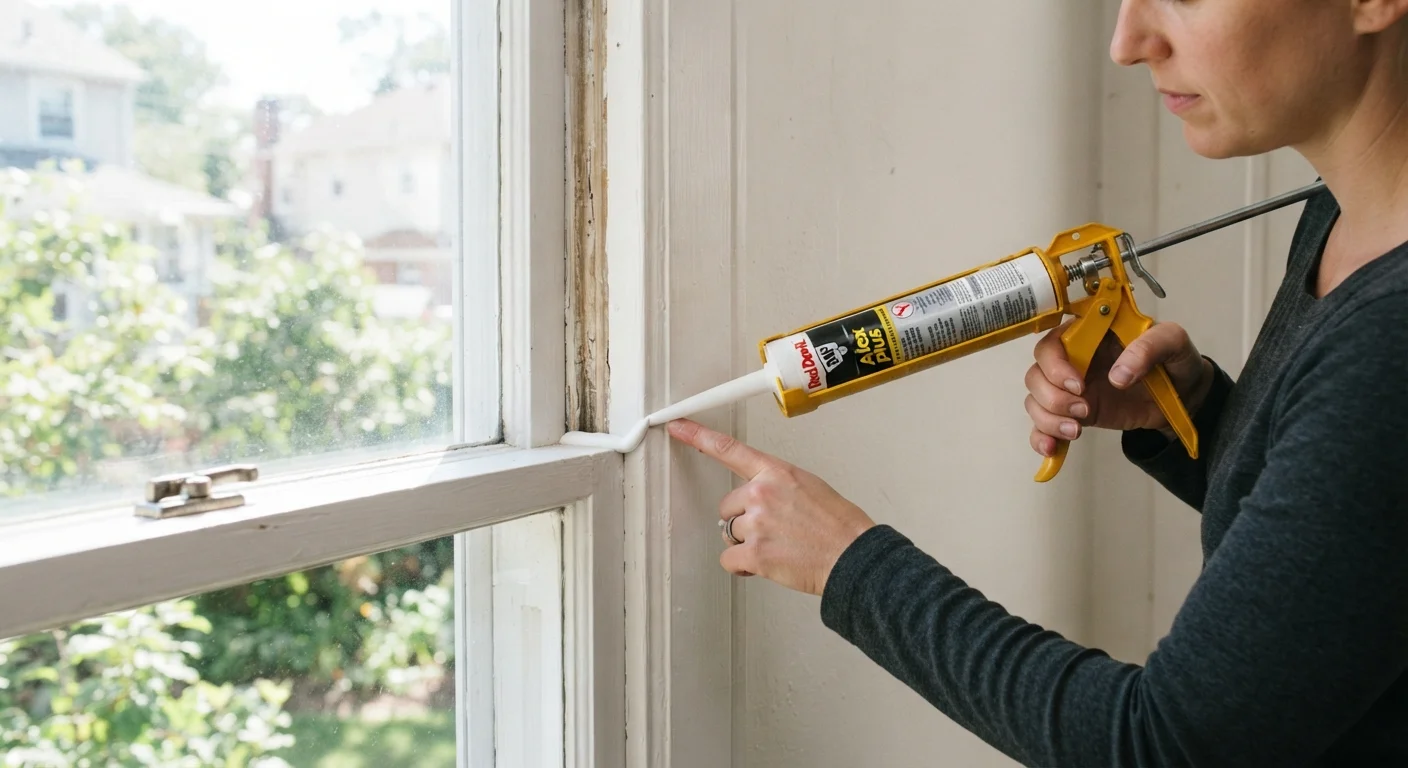
Insert the caulk tube into the gun. Cut the nozzle tip at a 45-degree angle, starting with a small opening, roughly 3/16 inch. A smaller hole gives you better control than a large one. Pierce the inner foil seal with a long nail or the built-in poker on the gun if present.
Apply the caulk in one continuous bead
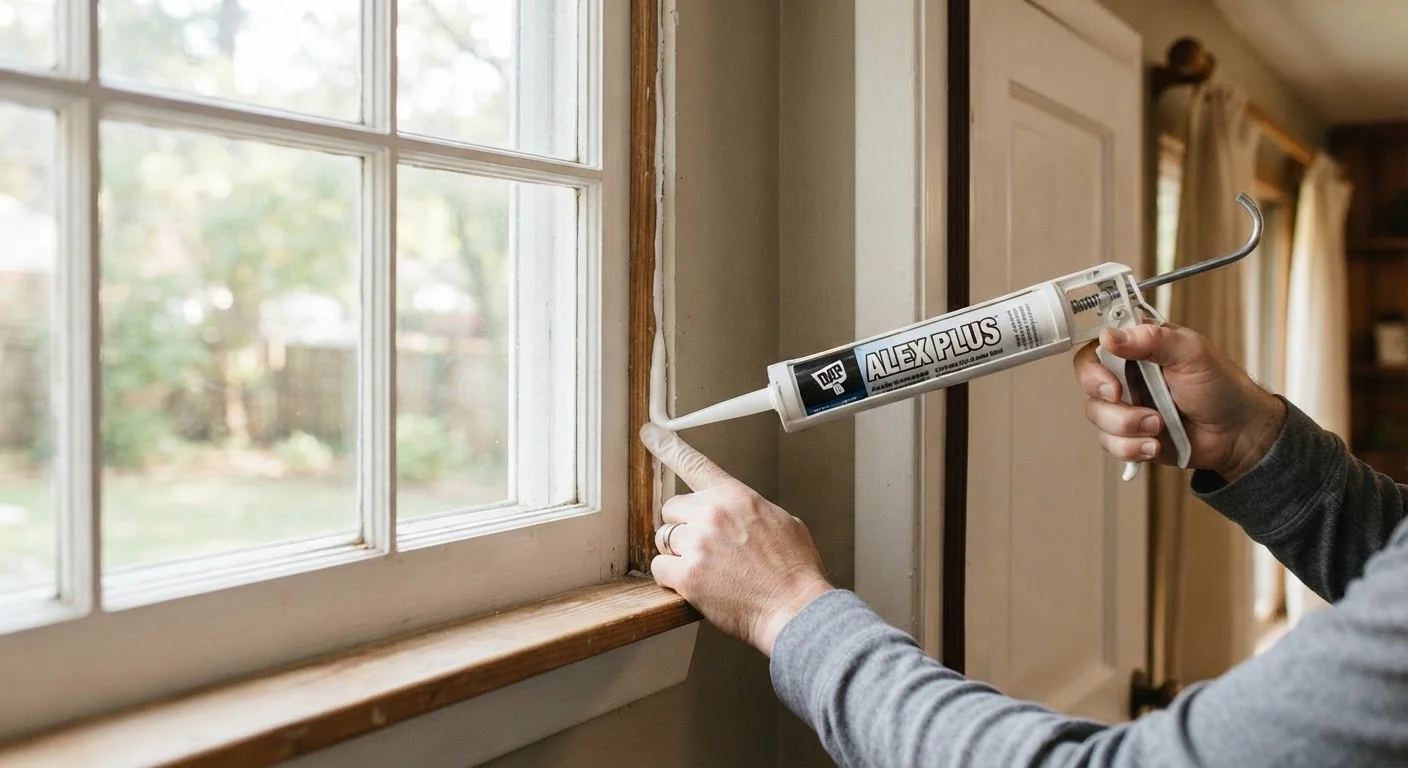
Hold the gun at roughly 45 degrees to the gap. Move steadily along the joint while squeezing the trigger at a consistent rate. Aim to fill the gap in one pass rather than going back and forth. If you stop, release the trigger pressure to prevent the caulk from continuing to flow.
Tool and smooth the bead
Within a few minutes of application, wet your finger or a caulk-finishing tool with water (for latex) or isopropyl alcohol (for silicone) and draw it smoothly along the bead. This pushes caulk into the joint and creates a clean, concave surface. Remove excess with a damp rag.
Install or replace weatherstripping
Clean the door or window surface where the weatherstripping will adhere. For adhesive-backed foam or V-strip, peel and press firmly into place. For V-strip installed with nails or screws, use the fasteners provided and space them every 6 to 8 inches. For a door sweep, hold it against the closed door bottom, mark the screw holes, and drive screws into the door face. The sweep should contact the threshold lightly when the door closes, not drag heavily against it.
Keeping seals in good shape over time
Caulk and weatherstripping do not last forever. Silicone caulk typically holds up for 10 to 20 years; acrylic latex may need attention sooner, particularly on south- or west-facing exposures that see more sun. Foam weatherstripping often compresses within a few years, while V-strip and rubber compression seals can last much longer with no maintenance.
A quick annual check, ideally in fall before cold weather arrives, catches problems early. Look for caulk that has pulled away from one surface, developed cracks, or turned chalky. Press on weatherstripping to see if it springs back; if it stays flat, replace it.
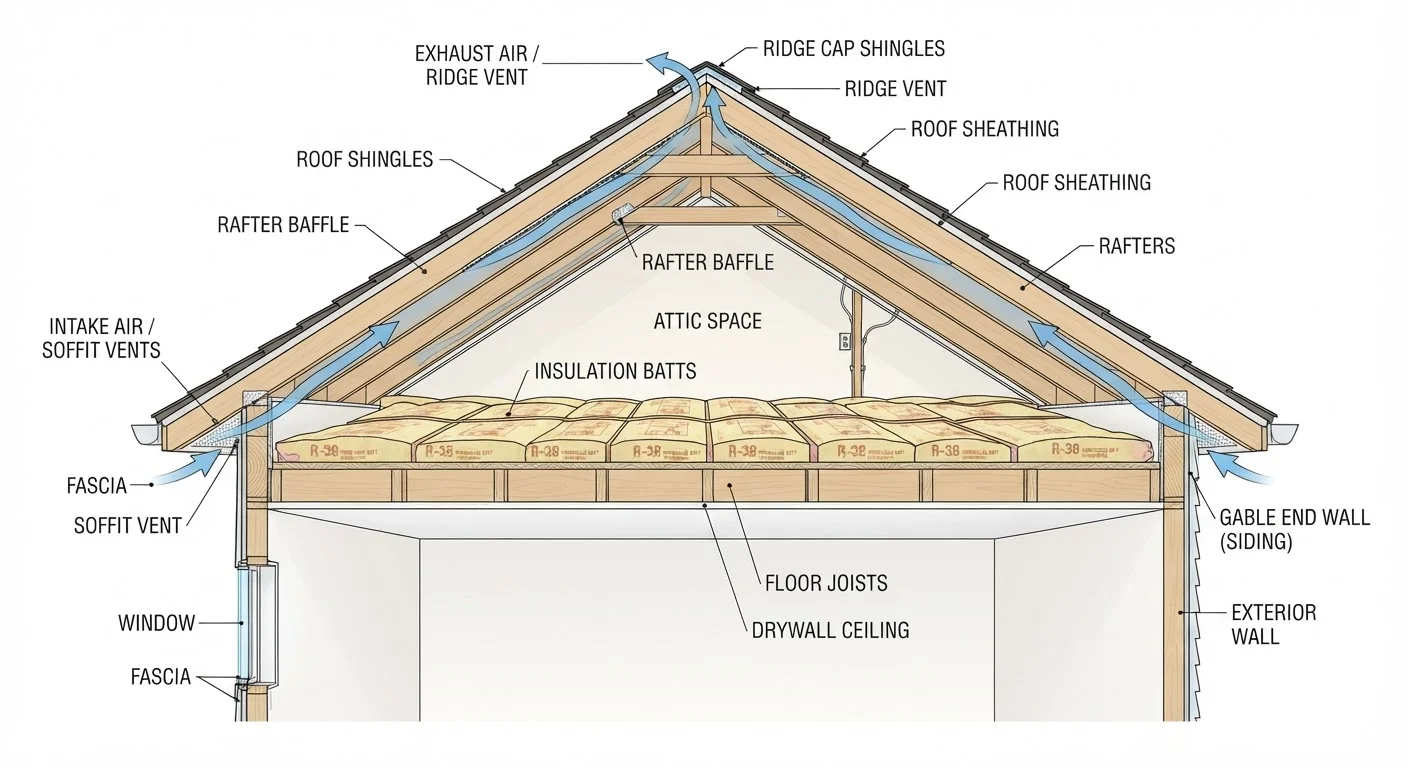
Air sealing works alongside insulation. If you have addressed gaps around windows and doors but still notice comfort issues, the attic is often the next place to look. See what homeowners should know before insulating an attic for guidance on that next step.