Why plumbing myths persist
Plumbing is largely hidden behind walls and under floors, so most homeowners have limited direct experience with how pipes, drains, and fixtures actually work. That gap in visibility makes it easy for shortcuts and half-truths to spread. A neighbor swears by a trick that happened to work once, or a product label implies a capability the product does not reliably have, and the belief takes hold.
The consequences range from minor inconvenience to expensive repairs. Recognizing which common assumptions are wrong is the first step to maintaining a system that works quietly in the background the way it should. For related misconceptions that show up in other areas of the home, see the home renovation myths guide.
Myth
Flushable wipes are safe to flush because the package says so.
Fact
Most wipes marketed as flushable do not break apart in water the way toilet paper does, and they frequently cause blockages in home drains and municipal sewer systems.
Toilet paper is engineered to disintegrate within seconds of contact with water. Wipes, even those labeled flushable, are made from non-woven synthetic or cellulose fibers that hold together far longer. Plumbers regularly pull intact wipes from drain lines that were flushed months earlier. Over time, wipes accumulate at bends in the pipe or at the connection point to the municipal sewer, forming dense clogs that require professional hydro-jetting or mechanical snaking to clear. The safest practice is to dispose of all wipes in a waste bin, regardless of label claims.
Myth
Running cold water while using the garbage disposal washes grease safely down the drain.
Fact
Water, hot or cold, does not dissolve grease. It carries grease further down the pipe, where it cools and solidifies, narrowing the drain over time.
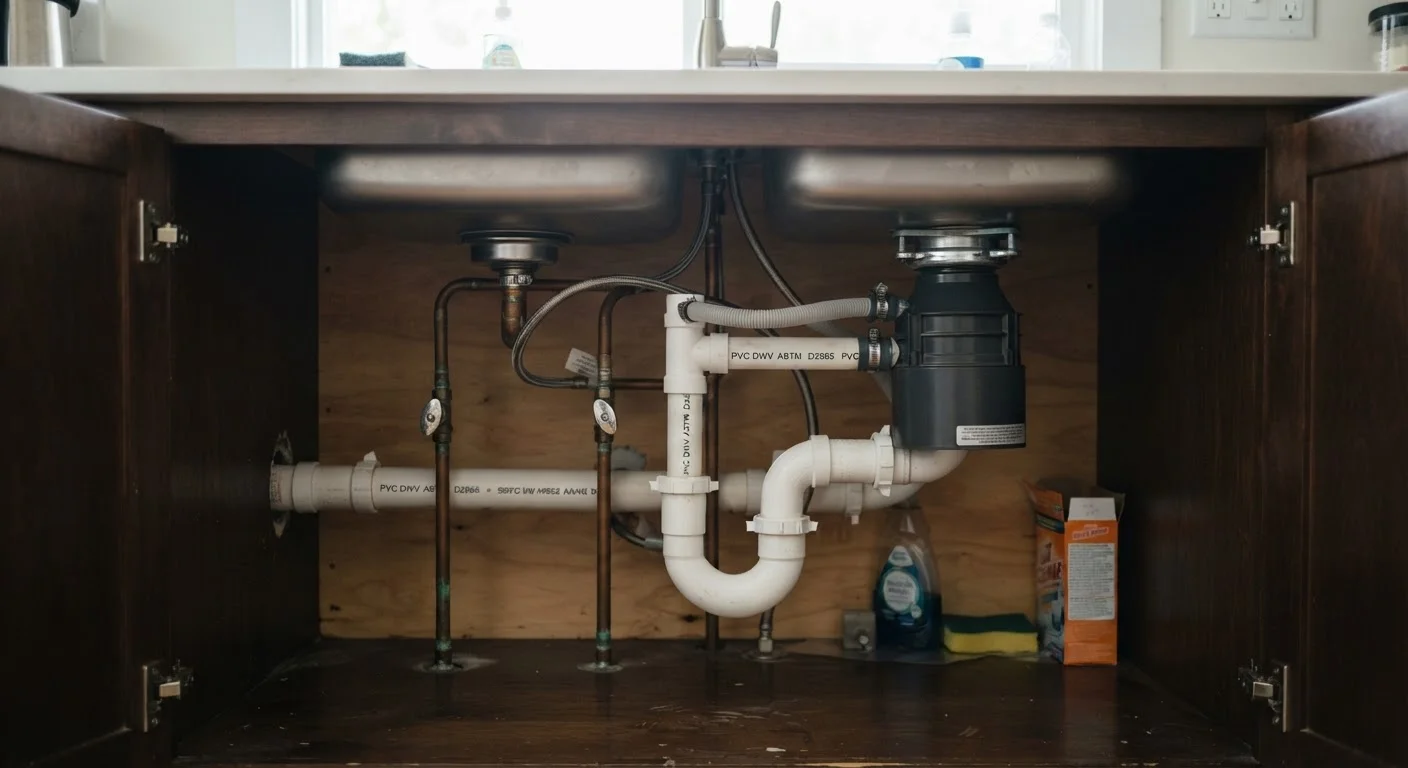
Grease behaves like wax: liquid when warm, solid when cooled. Pouring it down the drain while running water simply moves the problem a few feet further into the pipe, where it coats the interior walls and eventually restricts flow. The garbage disposal itself is also not built for fibrous or starchy foods such as celery, potato peels, or pasta, which wrap around the grinding components or expand and form a paste. Cooking grease belongs in a sealed container in the trash; fibrous scraps belong in a compost bin or the garbage.
Myth
A slow drain is just a minor annoyance that clears up on its own.
Fact
A slow drain is usually an early sign of a partial blockage or pipe buildup that will worsen without attention.
Drains slow down because something is reducing the pipe's flow capacity. Hair, soap scum, food particles, and mineral deposits from hard water all accumulate on pipe walls. Left alone, a partial clog becomes a full one. In some cases, a slow drain indicates a venting problem or a partial obstruction further down the main line, neither of which resolves without intervention. Clearing a drain with a manual drain snake or a simple hair-catching tool at the stopper is easier and cheaper than dealing with a fully blocked pipe later. If multiple drains in the home slow at the same time, that pattern suggests a main-line issue requiring professional inspection.
Myth
Chemical drain cleaners are a reliable fix for clogs.
Fact
Chemical drain cleaners work inconsistently, and in older pipes or certain materials, the caustic chemicals can cause corrosion that leads to leaks.
Products containing lye (sodium hydroxide) or sulfuric acid generate heat as they react, which can warp PVC fittings and weaken older metal pipes if used repeatedly. They also tend to dissolve organic material at the point of contact without fully clearing a compacted clog, which means the problem returns quickly. A manual drain snake or a cup plunger is more effective for most household clogs and carries no risk of pipe damage. For persistent blockages, a plumber with a hydro-jet can clear the line completely without introducing corrosive chemicals to the system.
Myth
A small drip from a faucet or pipe will probably seal itself over time.
Fact
Plumbing leaks do not self-repair. Even a slow drip wastes a measurable amount of water and can cause wood rot, mold growth, or structural damage if ignored.
A faucet dripping once per second wastes roughly 3,000 gallons of water per year, according to the U.S. Environmental Protection Agency. The damage extends beyond the water bill: moisture behind walls or under cabinets creates conditions for mold and can weaken framing over months. Compression faucets typically need a new washer, a straightforward repair for someone comfortable with basic tools. Cartridge or ceramic-disc faucets may need a replacement cartridge. Neither job requires cutting into walls, but both require turning off the water supply at the shutoff valve first. Ignoring the drip guarantees the cost grows.
What these myths cost you
Most plumbing myths share a common outcome: they delay the right action long enough that a simple fix becomes a costly one. A clog that could have been cleared with a $15 drain snake turns into a $300 service call. A dripping faucet ignored for a year adds up on the water bill and softens the cabinet floor beneath it.
When to call a licensed plumber
Work involving supply lines under pressure, gas-connected water heaters, or pipe replacement inside walls typically requires a licensed plumber and may need a permit. Attempting these repairs without proper training can cause flooding, structural damage, or code violations. Always verify local permit requirements before starting any significant plumbing project.
Preventive habits matter more than any quick fix. Keeping grease out of drains, disposing of wipes in the trash, and addressing slow drains promptly are all low-effort actions with measurable long-term payoff. Your water heater is another area where simple maintenance prevents major expense. The water heater maintenance guide covers flushing sediment and checking anode rods before problems develop. And before winter arrives, protecting exterior plumbing is worth the time. The guide to winterizing outdoor faucets and pipes walks through the process clearly.
3,000 gal
Water wasted per year by a dripping faucet
The U.S. Environmental Protection Agency estimates a faucet dripping once per second wastes approximately 3,000 gallons of water annually.
~$150+
Typical cost range for a professional drain clearing
Professional drain cleaning for a localized blockage commonly runs from around $150 upward depending on the severity and location of the clog.