Why watering depth matters more than frequency
Many homeowners water their lawns a little every day, assuming consistency is the goal. Frequent shallow watering actually trains grass roots to stay near the surface, where soil dries out fastest. When a dry stretch arrives, those shallow roots have nowhere to draw moisture from.
Deep, infrequent watering pushes moisture down into the soil profile, which encourages grass roots to follow. Roots that reach 4 to 6 inches deep are far more resilient during dry periods than roots sitting just below the surface.
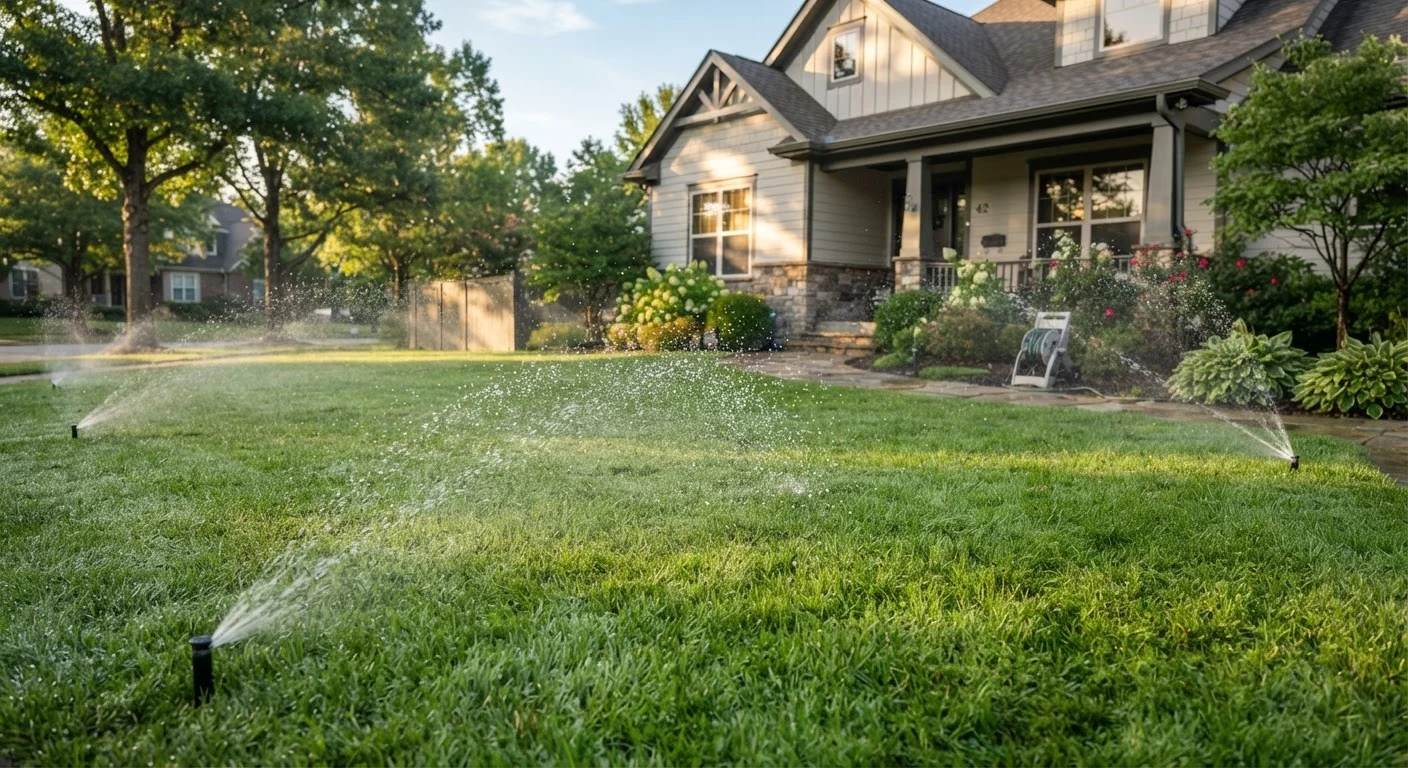
The general target is 1 to 1.5 inches of water per week, delivered in one or two sessions rather than daily sprinkles. To measure what your sprinkler system actually puts down, place empty tuna cans in several spots on the lawn and run your system for a set time. The depth of water collected tells you how long to run each zone to hit your target. For more on what happens when watering habits tip too far the other way, see why overwatering harms plants.
Water deeply and infrequently rather than a little each day.
Daily light watering keeps moisture near the surface, producing shallow roots that struggle during dry or hot periods. Deeper watering trains roots to grow downward, where soil stays moist longer.
Measure what your sprinklers actually deliver before setting a schedule.
Sprinkler output varies widely by head type, water pressure, and zone size. Without measuring, you are guessing, and both underwatering and overwatering damage grass over time.
Adjust your schedule monthly to match current weather conditions.
A schedule that works in June will likely overwater in September or underwater in August. Grass water needs shift with temperature and rainfall, so a fixed schedule leads to waste or stress.
Always water in the early morning, not in the evening.
Evening watering leaves moisture on grass blades through the night, creating conditions that favor fungal growth. Morning watering allows the surface to dry while still giving roots time to absorb.
Check soil moisture before watering rather than following a fixed day.
Rain, cooler temperatures, and soil type all change how quickly a lawn dries out. Watering on schedule regardless of actual conditions wastes water and can damage turf.
Adjusting your schedule through the seasons
Grass does not have a fixed water requirement year-round. Temperature, sun exposure, humidity, and the grass's own growth cycle all change what it needs.
In spring, cooler temperatures and natural rainfall often mean you need little supplemental watering. As growth accelerates, monitor soil moisture rather than running a fixed schedule. Summer is when most lawns are at risk: heat increases evaporation, and clay soils can crack while sandy soils drain quickly. Increase watering sessions during heat waves, but water less during stretches of natural rain.
In fall, grass in most of the U.S. begins slowing growth. Scale back watering gradually and stop entirely once the ground cools and rainfall resumes. A fall yard prep checklist can help you time this wind-down properly. In winter, established cool-season grasses typically need no supplemental water. Warm-season grasses go dormant and also need little to none.
A month-by-month lawn care calendar is a useful reference for matching your watering routine to your region's climate patterns.
Soil type and how it changes your approach
Soil is not uniform across American yards, and its texture directly affects how you should water. Sandy soil drains quickly, so water passes through before roots can absorb much of it. Clay soil holds water longer but can become waterlogged, which suffocates roots. Loamy soil, a mix of sand, silt, and clay, absorbs and holds moisture at a pace most grass types prefer.
If your yard has sandy soil, shorter, more frequent watering sessions help ensure moisture is available before it drains past the root zone. For clay-heavy soil, water slowly to prevent runoff, and allow longer drying time between sessions to avoid standing water. A simple way to check soil moisture before watering is to push a screwdriver or finger about 2 inches into the ground: if soil comes up damp, your lawn does not need water yet.
Compacted soil is a separate issue that reduces water absorption regardless of soil type. Lawn aeration breaks up compaction and helps water reach the root zone more efficiently.
Timing and practical habits that improve results
When you water matters nearly as much as how much you apply. Early morning, roughly between 6 a.m. and 10 a.m., is consistently the most effective window. Water applied in the morning has time to soak in before peak heat increases evaporation. Watering in the evening leaves grass blades wet overnight, which raises the risk of fungal disease.
Midday watering is not as harmful as some believe, but much of it evaporates before it can soak in, making it inefficient. If early morning watering is not practical every time, a mid-morning session is a reasonable alternative.
Automatic irrigation systems can simplify scheduling, but they need seasonal adjustments. A system set for August conditions left running unchanged in September can apply far more water than the lawn needs. If your region has water restrictions, local guidelines may specify permitted watering days and times: check with your water utility before setting a schedule.
Good watering practices also work alongside other lawn habits. Understanding what your lawn actually needs from fertilizer helps you avoid over-applying nutrients that push growth faster than your watering can support. If you are interested in reducing your water use long-term, drought-tolerant landscaping offers alternatives that stay attractive with far less irrigation.