What counts as a native plant
A native plant is one that grew in a specific region before European settlement, without human introduction. The term is geographic, not generic: a plant native to the Pacific Northwest is not automatically native to the mid-Atlantic, even if it grows fine there. Regional databases such as the USDA PLANTS Database and the Lady Bird Johnson Wildflower Center's native plant finder can help you identify which species belong in your area.
This distinction matters because the wildlife benefits of native plants depend on co-evolved relationships. Native bees, for example, often require pollen from specific plant families that developed alongside them over thousands of years. A plant from another continent, even a beautiful one, may not fill that role.
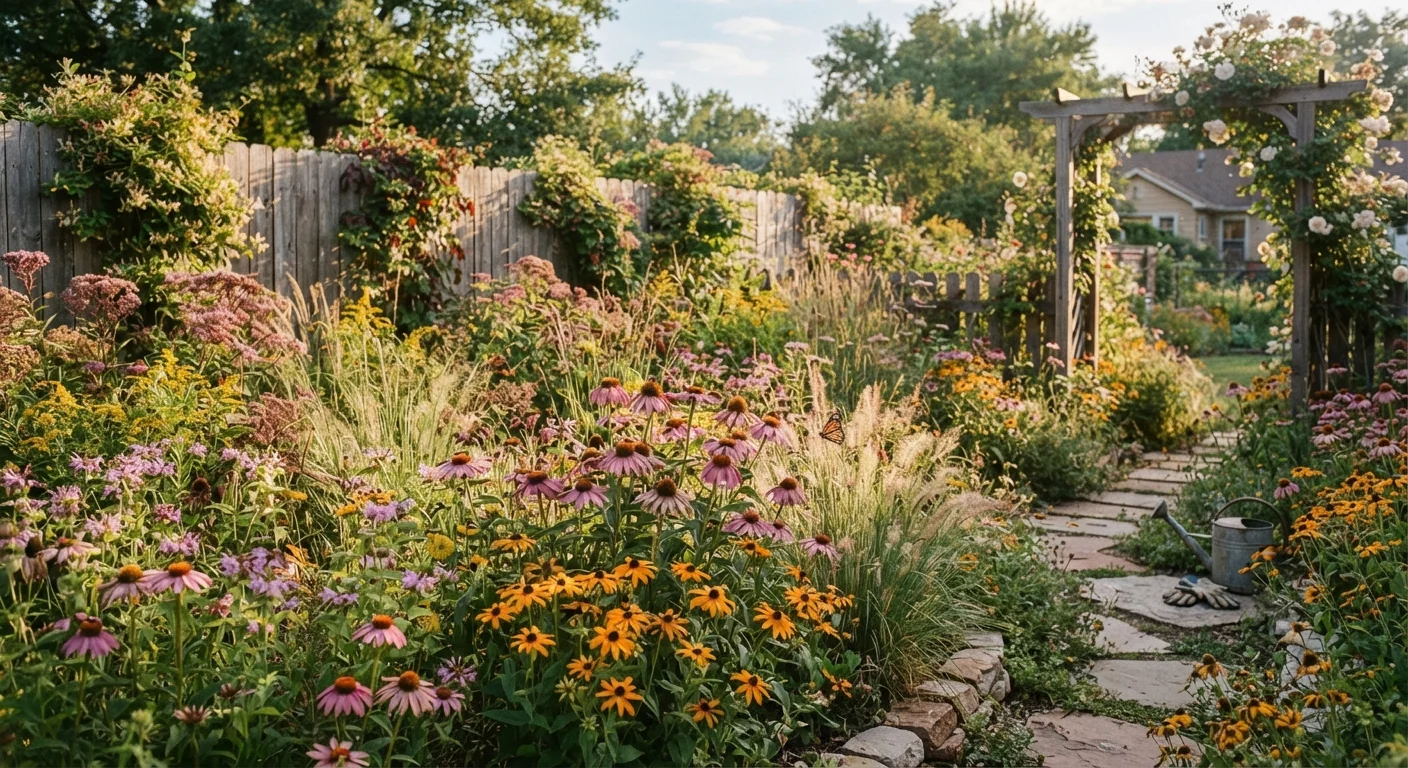
When shopping at a nursery, look for the straight species rather than named cultivars. A cultivar labeled 'Purple Coneflower - Magnus' has been bred for larger blooms, but that breeding sometimes reduces seed set and pollen availability, which lowers its value to pollinators compared to the straight Echinacea purpurea.
The case for going native
Lower water needs once established
Native plants are adapted to local rainfall patterns, so most require little to no irrigation after their first one to two seasons in the ground. This can meaningfully cut outdoor water use compared to a conventional lawn.
No fertilizer required in most cases
Because these plants evolved in local soils, they are adapted to native nutrient levels. Adding fertilizer is usually unnecessary and can sometimes promote weedy competitors instead.
Supports native pollinators and birds
Native plants provide pollen, nectar, seeds, and larval host material that many local insects and birds depend on. Non-native ornamentals often cannot fill these ecological roles.
Reduced need for pesticides
Plants growing in conditions they are adapted to tend to have fewer pest and disease problems, which means less intervention with chemical controls over time.
Year-round garden interest
Many natives bloom in early spring or late fall when little else is flowering, and their dried seed heads and stems provide winter structure without extra effort.
Once established, native plants generally need no supplemental fertilizer because they are adapted to local soil nutrient levels. That reduces both cost and the risk of nutrient runoff into nearby waterways. If you are already working to reduce water use in your yard, natives are a natural complement to that effort.
Native plants also extend the season of interest in ways that a conventional lawn cannot. Many bloom in early spring before most ornamentals leaf out, then set seed in fall when migrating birds need high-fat food sources. The structural interest of dried seed heads and native grasses carries through winter without any extra work on your part.
The honest drawbacks
Slow establishment in the first season
Many natives invest early energy in root growth rather than visible top growth, so new plantings can look underwhelming for a full growing season. Regular watering is still needed during this period.
Some species spread aggressively
Plants like native mints, goldenrod, and certain asters can colonize space beyond where they were planted. In a small garden, this requires active management or physical root barriers.
Limited availability in some regions
Mainstream garden centers often carry a narrow selection of true natives, and some plants labeled as natives are actually cultivars with reduced ecological value. Finding the right plants may require sourcing from specialty nurseries.
Can look informal or 'weedy' to some neighbors
Native plantings often have a naturalistic look that differs from the tidy, clipped appearance of conventional landscapes. In neighborhoods with strict HOA guidelines, this may require review before planting.
Requires regional research before purchase
A plant native to one part of the country may not be native to yours. Buying without checking regional databases can result in plants that offer few local wildlife benefits and may even become invasive.
The establishment period is the most common reason homeowners give up on native plantings. During the first growing season, many natives put energy into root development rather than top growth, so the garden can look sparse or weedy. Regular watering during dry spells is still necessary until roots reach depth, which often takes two full seasons. See the watering schedule guide for practical guidance on how much water young plants actually need.
Sourcing is another genuine challenge. The native plant market has grown, but availability varies widely by region. Some species sold as natives are actually nativars (cultivated varieties) or are mislabeled entirely. Buying from a specialist native plant nursery or a local native plant society sale reduces this risk considerably.
Getting started without starting over
You do not need to tear out your entire yard to begin. A practical approach is to replace one area at a time, starting with a spot that already struggles, such as a dry slope or a shaded patch under trees. That kind of difficult site is often where natives genuinely outperform conventional plants. If shade is the challenge, the shade garden guide covers which native and shade-tolerant species work well in low-light conditions.
Soil preparation is straightforward. Remove existing turf, loosen the top few inches, and plant at the recommended spacing. Resist the urge to amend heavily with compost or fertilizer: many natives are adapted to lean soils and excess nutrients can actually favor weeds over the plants you want to establish.
Timing and seasonal setup
Fall is often the best time to plant natives in most U.S. regions because cooler temperatures reduce transplant stress and winter rainfall helps roots establish without supplemental watering. Spring planting works too, but requires more attentive watering through summer. Check your local cooperative extension service for region-specific planting windows.
Work through the spring planting checklist to time your native plantings alongside other garden prep, and check the overwatering guide if young plants begin to yellow or wilt unexpectedly.
Wildlife impact: what the research shows
500+
Caterpillar species supported by native oaks
Research by entomologist Doug Tallamy at the University of Delaware found that native oak trees support more than 500 caterpillar species, compared to fewer than 5 for many common ornamental trees.
4,000+
Native bee species in North America
The USDA estimates there are more than 4,000 native bee species across North America, many of which depend on specific native plant families for pollen and nesting resources.
30%
Potential reduction in outdoor water use
The EPA's WaterSense program has noted that landscaping accounts for up to 30% of household water use, and replacing water-intensive turf with adapted natives can substantially reduce that share.
The ecological argument for natives is grounded in research on plant-insect relationships. Entomologist Doug Tallamy's work at the University of Delaware has documented that native oaks alone support more than 500 species of caterpillars, while many common ornamental trees support fewer than five. Those caterpillars are the primary food source for baby songbirds, so the plant choices in your yard have consequences beyond aesthetics.
Native bees, which include more than 4,000 species in North America, are generally more efficient pollinators of food crops than European honeybees for many native plants. Providing habitat for them through native plantings in residential gardens contributes to pollinator populations at a landscape scale, though the precise local impact depends on what surrounds your property.