Where the 3,000-mile rule came from
The 3,000-mile oil change interval became common advice during an era when engines had looser tolerances, oil refining was less advanced, and many vehicles ran on conventional motor oil. Quick-lube shops reinforced the number through marketing, and it stuck with drivers across generations.
Today, that figure is outdated for the vast majority of passenger vehicles on American roads. Engine manufacturing precision has improved substantially, and modern motor oils, particularly full synthetic formulations, are engineered to maintain their protective properties far longer than oils from decades past.
The California Department of Resources Recycling and Recovery has noted that millions of gallons of oil are changed unnecessarily each year because drivers follow the 3,000-mile guideline instead of their vehicle's actual service schedule. Changing oil too early is not just wasteful; it gives drivers a false sense of confidence that they are ahead on maintenance when the interval the manufacturer designed for their engine is the only number that matters.
What the myths get wrong
Myth
You should change your oil every 3,000 miles, no matter what.
Fact
Most modern vehicles with synthetic oil need changes every 5,000 to 10,000 miles, and some go up to 15,000 miles per the manufacturer's specification.
The 3,000-mile figure predates modern synthetic oils and current engine technology. Following it on a newer vehicle means you are paying for oil changes your engine does not need yet. Check your owner's manual: the manufacturer's interval is based on actual testing of your specific engine, not a general estimate.
Myth
Dark oil always means it needs to be changed immediately.
Fact
Oil darkens as it does its job of suspending combustion byproducts, which is normal and expected. Color alone does not determine whether oil needs changing.
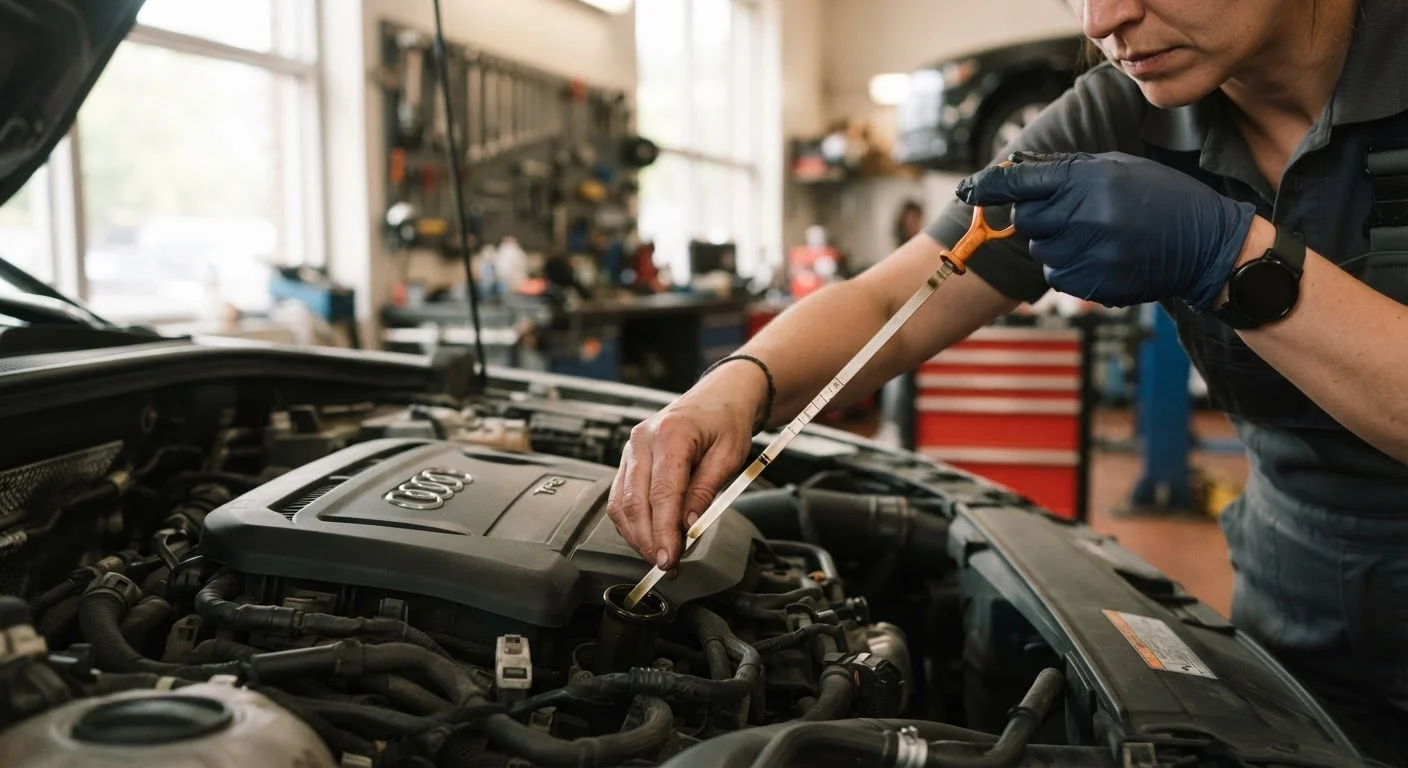
Conventional wisdom links black oil to a failed oil change, but dark color simply means the oil has been doing its job. Additives in modern oils are designed to hold contaminants in suspension so they do not deposit on engine parts. A better check is the oil's consistency and smell. If it smells burnt or feels gritty between your fingers, that is more meaningful than color. The oil life monitor or your mileage interval is a more reliable guide.
Myth
Switching to synthetic oil after using conventional will damage your engine or cause leaks.
Fact
Modern synthetic oils are fully compatible with conventional oils and will not cause leaks in a properly maintained engine.
This myth likely grew from early synthetic formulations that had different seal compatibility. Current full synthetic and synthetic-blend oils meet or exceed the same API and ILSAC standards as conventional oils. If an engine has existing seal deterioration, it may have been leaking or about to leak regardless of oil type. Switching to synthetic will not cause new leaks in a healthy engine.
Myth
You need to warm up your engine for several minutes before driving in cold weather.
Fact
Modern fuel-injected engines do not need prolonged idling to warm up. A brief idle of about 30 seconds before driving gently is sufficient.
Extended idling in cold weather is inefficient and does not warm the engine as effectively as gentle driving. Modern engines are designed to reach operating temperature faster under light load than at idle. Letting the vehicle sit for five or ten minutes wastes fuel and increases wear by running the engine longer before oil pressure and temperature reach their optimal range. Drive gently for the first few minutes rather than idling at length.
Myth
All oil changes should include a complete flush of the old oil system.
Fact
Engine flushes are not part of standard maintenance schedules for most vehicles and can introduce risks if the engine has accumulated deposits over time.
A chemical engine flush product, added before an oil change to clean internal deposits, is not recommended for most vehicles by their manufacturers. In an engine with significant accumulated sludge, a flush can dislodge deposits that then clog passages. Regular oil changes on schedule prevent buildup in the first place. If you are concerned about internal cleanliness due to neglected changes, consult a qualified mechanic rather than applying a flush product on your own.
How to find your actual interval
The owner's manual is the authoritative source for oil change intervals. Manufacturers test their engines extensively and publish a specific interval, often expressed in miles, months, or both. Many manuals also distinguish between normal and severe driving conditions, which affects the recommendation.
Severe conditions include frequent short trips of less than five miles, stop-and-go traffic, towing or hauling heavy loads, and driving in extreme heat or cold. If your daily commute involves a lot of idling or short hops, the shorter severe-duty interval in your manual applies more directly to your situation than the standard one. See how to read your vehicle's maintenance schedule for a practical walkthrough of that section of your manual.
Many vehicles produced since the mid-2000s also include an oil life monitoring system. This system uses an algorithm that factors in engine revolutions, temperatures, and load to calculate remaining oil life. When the monitor signals a change is needed, that is a reliable trigger. You do not need to override it with an arbitrary mileage number.
If you are unsure which oil type your engine requires, your owner's manual specifies the viscosity grade (such as 5W-30 or 0W-20) and whether full synthetic is required. Using the wrong viscosity can affect fuel economy and engine protection, so matching the specification matters. The guide to checking car fluids covers how to read the dipstick and identify what healthy oil looks like between changes.
Driving habits that genuinely affect oil life
Oil degrades through heat cycles, contamination, and oxidation. Certain habits accelerate that process regardless of what the odometer reads.
Frequent short trips are particularly hard on oil. When an engine does not reach full operating temperature, moisture and combustion byproducts accumulate in the oil rather than burning off. A driver who makes only short city runs may need to change oil closer to the lower end of the recommended range even with synthetic oil.
Towing a trailer or carrying heavy loads increases engine load and heat, which breaks down oil faster. High-performance driving, track days, or aggressive acceleration in hot weather has a similar effect.
Conversely, a driver who takes long highway trips in moderate temperatures is putting minimal stress on the oil, and that vehicle may comfortably reach the upper end of the manufacturer's interval without issue.
For a broader look at how maintenance habits affect long-term vehicle health, maintenance habits that extend vehicle life covers what high-mileage owners tend to do differently. And for a quick reference on all major service intervals, car maintenance intervals every owner should know puts the full picture in one place.