How to recognize misalignment before it gets expensive
Wheel alignment refers to the angles at which your tires contact the road. When those angles drift outside the manufacturer's specifications, several symptoms appear, and they tend to worsen gradually rather than all at once.
The most common sign is a vehicle that pulls consistently to one side when you release the steering wheel on a flat, straight road. A mild pull can feel easy to ignore, but it means the driver is constantly making small corrections, which adds up in both fatigue and component wear.
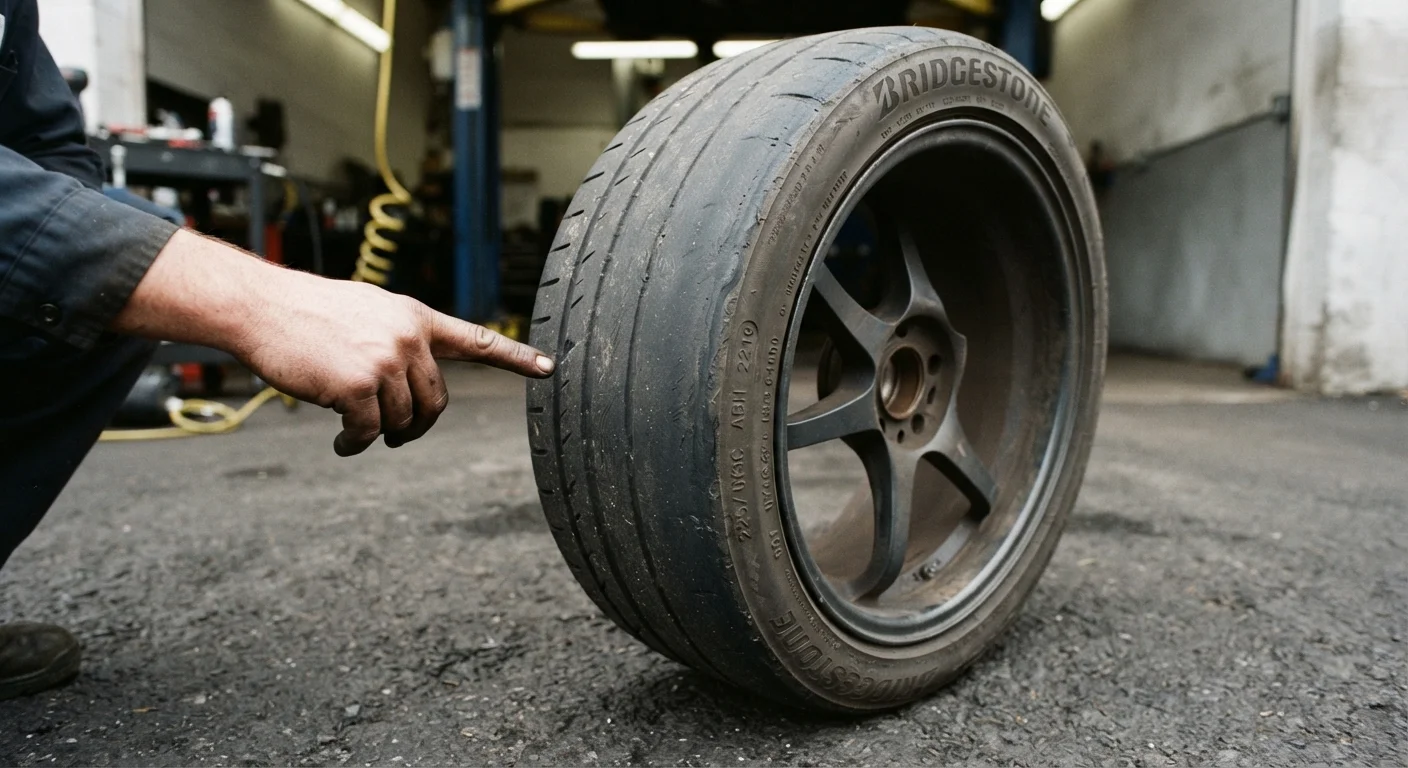
Uneven tire wear is the other major indicator. When alignment is correct, tread wears relatively evenly across the tire's width. Misalignment concentrates wear on one edge. Checking your tires every few weeks, especially the inner edges that are easy to miss, gives you an early warning. See our guide to tire rotation patterns for more on how rotation habits affect wear.
Steering wheel vibration between 50 and 70 mph can also indicate alignment problems, though it sometimes points to wheel balance issues instead. A shop can distinguish between the two quickly. Finally, a steering wheel that sits off-center when the car is driving straight is a straightforward clue that the alignment angles are uneven side to side.
What causes alignment to shift
Alignment does not drift on its own over very short periods. Most shifts happen because of specific events or gradual wear.
Hitting a pothole at speed is the most common single cause. The sudden lateral force on the wheel can push suspension components out of their set angles. Striking a curb, even at low speed, produces a similar effect. Many drivers do not connect a later alignment problem to a curb strike that happened weeks earlier.
Worn suspension components, particularly ball joints, tie rod ends, and control arm bushings, allow alignment angles to move as parts develop play. This type of misalignment tends to worsen progressively. A shop that finds worn components during an alignment check will typically flag them before adjusting, because aligning a car with worn suspension does not hold for long.
Minor rear-end or front-end collisions can knock alignment angles well outside spec even when visible body damage is minor. Any impact significant enough to be felt through the chassis warrants an alignment inspection. Your vehicle's maintenance schedule may not list a specific alignment interval, but most manufacturers and technicians suggest a check every one to two years or after any notable road impact.
Dismissing a subtle pull as a road camber issue.
Why it happens: Many roads are slightly crowned for drainage, and drivers often attribute mild pulling to the road surface rather than the vehicle.
Only inspecting the outer tire tread and missing edge wear.
Why it happens: The outer face of a tire is the easiest to see from a standing position, so inner-edge wear goes unnoticed until it is severe.
Getting an alignment without addressing worn suspension components first.
Why it happens: Drivers want the quickest fix and may not realize that a worn ball joint or tie rod end prevents the alignment from holding its setting.
Skipping an alignment check after a significant pothole or curb strike.
Why it happens: If the car drives normally immediately after the impact, many drivers assume no damage occurred.
Confusing wheel balance problems with alignment problems.
Why it happens: Both issues can produce vibration, so drivers sometimes seek one fix when the other is actually needed.
Why delaying correction compounds the problem
An alignment that is slightly off does not cause immediate catastrophic failure. That is exactly why many drivers tolerate the symptoms for months. The real cost accumulates in tire life. A car running with significant toe misalignment (toe refers to whether the fronts of the tires point inward or outward relative to the vehicle centerline) can scrub through tires in a fraction of their normal lifespan.
Misalignment accelerates tire costs quickly
Even a moderate misalignment can wear through a set of tires thousands of miles earlier than expected. Because the wear is concentrated on one edge, the tire may appear to have remaining tread depth from the outside while the inner shoulder is already dangerously thin. Check inner edges directly rather than relying on visual inspections from a standing position.
Beyond tires, prolonged misalignment puts uneven stress on wheel bearings, ball joints, and steering components. Those parts cost considerably more to replace than an alignment service. Driving habits that smooth out the problem, such as gentle cornering and avoiding rough roads, can slow the damage but do not stop it. The safe driving habits that reduce vehicle wear article covers how those choices interact with maintenance.
Steering response also degrades over time. A car pulling noticeably in one direction requires more physical input to hold a straight line, which affects reaction time in an emergency. Visibility-related checks are often grouped with safety maintenance, as covered in our visibility maintenance walkthrough, but alignment directly affects how the vehicle responds when a driver needs to act quickly.