Why routine roof inspections matter
A roof rarely fails overnight. What looks like a sudden leak almost always starts as a small, slow problem: a cracked shingle, a lifted flashing edge, or a clogged gutter that lets water pool. Catching those issues early is far cheaper than repairing the water-damaged sheathing, insulation, and drywall that follow a neglected roof.
Twice-yearly inspections, in spring and fall, fit naturally into routine home maintenance. Spring checks catch winter storm damage before heavy rains arrive. Fall checks identify summer UV wear before freezing temperatures expand any existing cracks. If you already track other seasonal tasks, adding a roof check takes less than an hour for most homes.
For context on prioritizing this task within a broader maintenance budget, see how to prioritize home maintenance spending.
What to check from the ground
Start every inspection from the ground. Walk the perimeter of your home slowly and scan the full roof surface with binoculars. This approach is safe, requires no equipment beyond binoculars, and catches most visible problems.
- Look for shingles that are missing, lifted at the corners, or noticeably darker than their neighbors.
- Check ridge lines and hip lines for straightness. Any visible dip or wave suggests decking or structural movement underneath.
- Scan valleys, which are the angled channels where two roof planes meet, for gaps, exposed wood, or debris buildup.
- Look at the roofline from multiple angles. Uneven lines at the eave can indicate sagging decking or rafter damage.
After the exterior walk, check your attic. Bring a flashlight and look for water stains on the sheathing, soft or discolored wood, active drips, and any pinpoints of daylight visible through the roof. Attic findings confirm exterior problems and sometimes reveal leaks that are not yet visible from outside.
Flashing
Thin metal strips installed where the roof meets vertical surfaces like chimneys or skylights to direct water away from joints.
Underlayment
A water-resistant sheet installed over the roof decking and beneath the shingles, providing a secondary barrier against moisture.
Granules
The mineral coating bonded to the surface of asphalt shingles that protects them from UV rays and adds fire resistance.
Decking (roof deck)
The flat structural panel, usually plywood or OSB, nailed to rafters that forms the surface everything else attaches to.
Valley
The angled channel formed where two sloping roof planes meet, a common area for water concentration and debris buildup.
Soffit vent
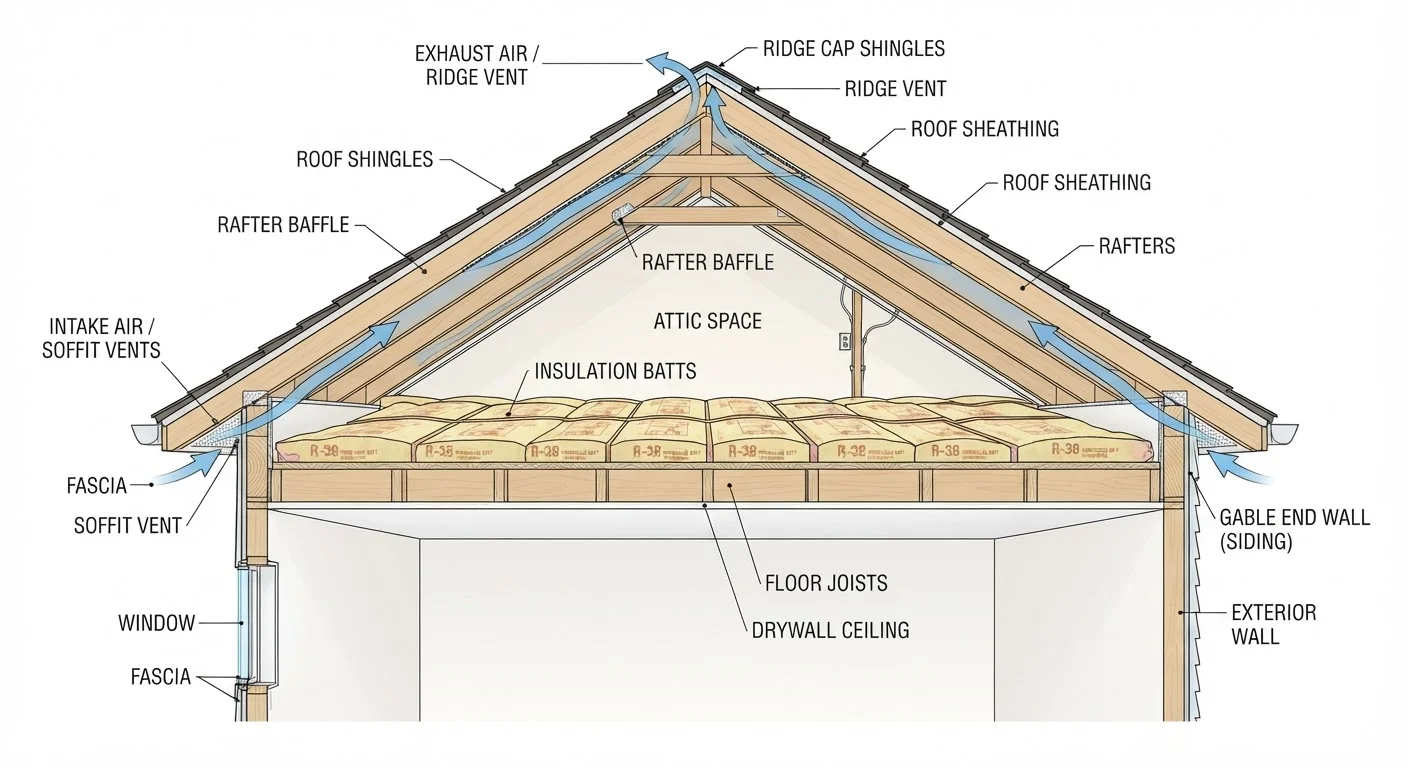
An air inlet located on the underside of the roof overhang that allows fresh air into the attic to support ventilation.
Key signs of wear and damage
Knowing what normal aging looks like helps you identify abnormal wear. Asphalt shingles typically last 20 to 30 years depending on climate, ventilation, and installation quality. As they approach the end of their lifespan, specific patterns appear.
Granule loss
Check your gutters and downspout discharge areas after rain. A small amount of loose granules is normal on new shingles. Heavy accumulation from an older roof means the protective coating is failing. On the roof surface itself, bald patches appear darker than surrounding shingles.
Curling and cupping
Shingle edges that curl upward (curling) or shingle centers that buckle upward while edges stay flat (cupping) both signal moisture imbalance or age-related brittleness. Either condition allows wind and water to get under the shingle.
Cracking and splitting
Older asphalt and wood shingles crack as they dry out. Single cracked shingles can sometimes be sealed, but widespread cracking across a large area points to a roof that is nearing full replacement.
Missing shingles
A missing shingle exposes the underlayment, a water-resistant layer beneath the shingles, to direct weather. Underlayment alone is not a long-term barrier, so missing shingles need prompt attention.
Do not walk on the roof to inspect it
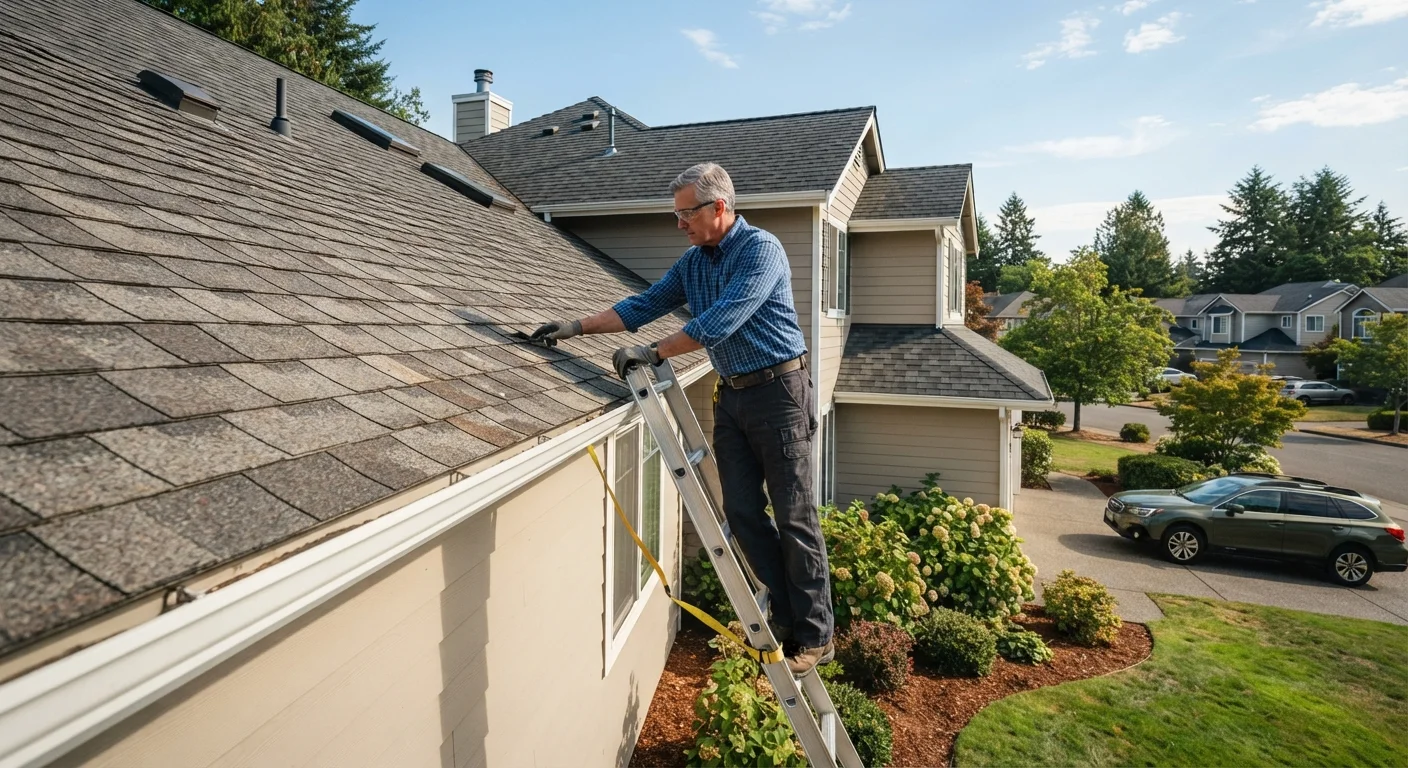
Walking on shingles carries a real fall risk, and foot traffic can crack brittle or aged shingles further. Ground-level viewing with binoculars and an attic check gather most of the information you need safely. Reserve roof-surface access for licensed contractors with proper safety equipment.
Checking flashing, gutters, and ventilation
Shingles get most of the attention, but flashing, gutters, and ventilation failures cause a large share of roof-related water damage.
Flashing
Flashing is thin metal (usually galvanized steel or aluminum) installed wherever the roof surface meets a vertical structure: chimneys, skylights, dormers, and plumbing vents. From the ground, look for visible gaps, rust staining running down the shingle surface below those features, and lifted or bent metal edges. Inside, ceiling stains near a chimney or skylight are a strong indicator of flashing failure.
Gutters
Gutters that pull away from the fascia, show visible rust holes, or overflow at connection points can send water behind siding and under the roof edge. Clean gutters at least twice a year and inspect the hangers and end caps while you do it. Granule buildup inside the gutter also tells you about shingle condition without you having to get on the roof.
Ventilation
Roof vents, ridge vents, and soffit vents work together to move air through the attic. Blocked vents trap heat and moisture, which accelerates shingle deterioration from below. Check that soffit vents are not covered by insulation from inside the attic. This connects directly to overall attic health; attic insulation basics covers how insulation placement affects ventilation.
For an overview of other parts of the house that are easy to overlook, commonly skipped maintenance areas covers several spots that quietly cause problems over time.
When to call a licensed roofer
A ground-level inspection and attic check are safe for most homeowners. Walking on the roof is a different matter. Steep slopes, wet or brittle shingles, and heights all create fall risk. If your inspection from the ground or attic raises any of the following concerns, contact a licensed roofing contractor rather than climbing up yourself.
- Active interior leaks or large water stains in the attic or ceiling.
- Visible sagging anywhere on the roof plane or along the ridge.
- Widespread shingle damage covering multiple sections rather than isolated spots.
- Any flashing repair, since improper flashing installation is one of the most common sources of new leaks.
- A roof that is more than 20 years old and has not been professionally assessed.
Licensed roofers carry liability insurance and, in most states, are required to pull permits for replacement work. Verify licensing and insurance before any contractor begins work, and get written estimates from more than one contractor for any large job. Local building codes may also require an inspection after roof replacement; your contractor should handle this, but confirm it before work starts.
Keeping up with roof inspections fits within the same mindset as other home systems maintenance. water heater maintenance follows a similar pattern: periodic checks catch small issues before they become emergencies.