Why fall prep matters more than spring cleanup
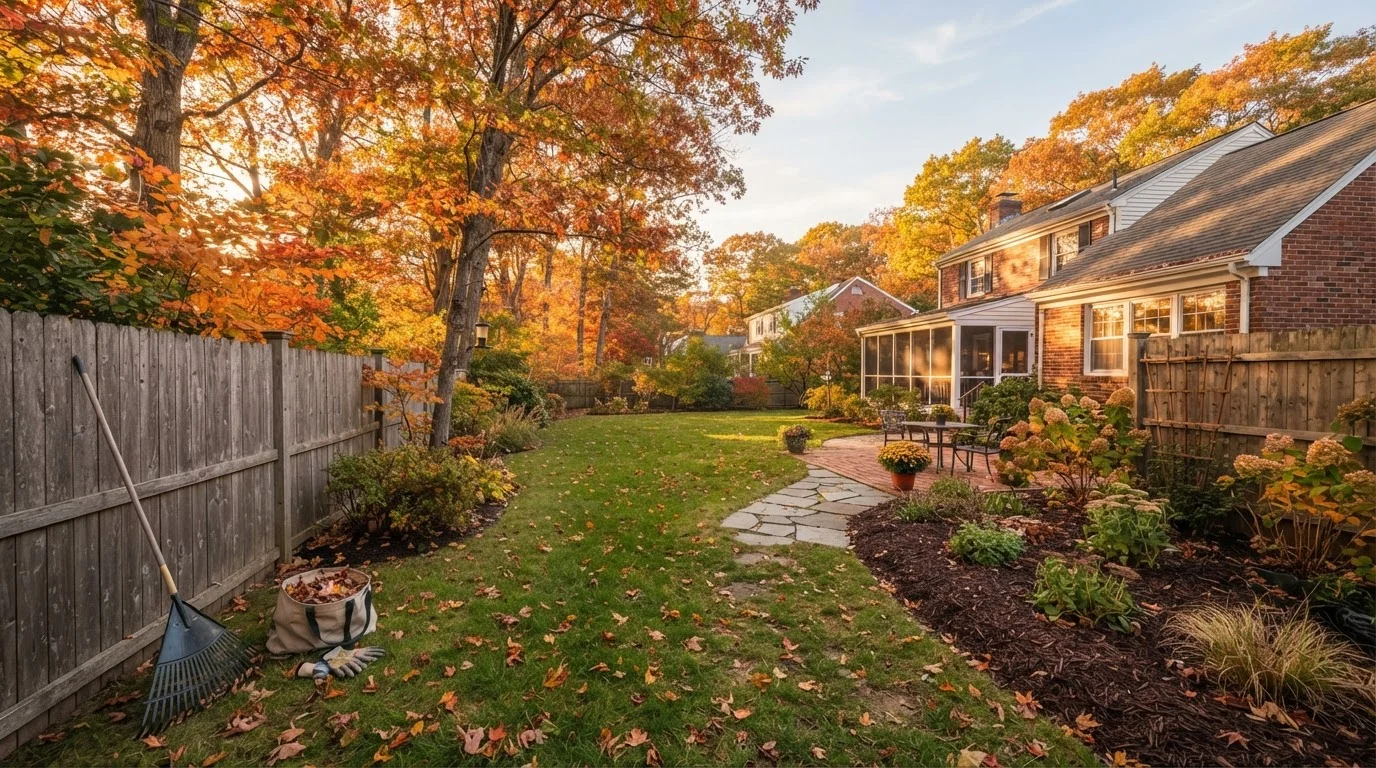
Most homeowners focus their yard energy on spring, but the work you do in fall is what determines whether your lawn and garden arrive at spring in reasonable shape. Grass roots continue growing after the last mow. Soil biology stays active well below the surface. The decisions you make now, including what you cut, what you leave, and what you add to the soil, carry through the coldest months.
This checklist covers the tasks that genuinely move the needle. Skip the ones that do not apply to your yard (no irrigation system means no blowout), and concentrate on the rest. For a broader view of how seasonal work fits together, see the month-by-month lawn care calendar that walks through every season in detail.
Lawn care
Garden beds and planting areas
Trees and shrubs
Outdoor plumbing and irrigation
Tools and equipment storage
What you will need
Gather these tools and materials before you start. Having everything on hand avoids multiple trips and lets you move efficiently through the checklist.
Core aerator
Pulls plugs of soil from the lawn to reduce compaction and improve fertilizer and water penetration.
Lawn spreader
Distributes fall fertilizer and grass seed evenly across the lawn.
Leaf rake or mulching mower
Clears fallen leaves from lawn surfaces or chops them into fine mulch.
Garden fork or spade
Used for dividing perennials, digging bulbs, and working mulch into bed edges.
Shredded leaf or wood chip mulch
Insulates garden bed soil against freeze-thaw cycles through winter.
Tree wrap
Protects young tree trunks from frost cracking and sunscald during cold months.
Fuel stabilizer
Prevents fuel breakdown in stored gas-powered equipment over winter.
Light machine oil or linseed oil
Applied to clean metal tool surfaces to prevent rust during storage.
Lawn tasks that protect grass through winter
Your lawn needs a specific sequence of care in fall to come back healthy in spring. Aeration, done before the ground hardens, loosens compacted soil and lets fertilizer reach grass roots directly. Fall fertilizer (sometimes called winterizer) feeds roots during the weeks when blades stop growing but roots do not. For cool-season grasses such as Kentucky bluegrass and tall fescue, this is the most important fertilizer application of the year.
Mowing height matters more than many homeowners expect. Grass left too long going into winter is prone to snow mold, a fungal disease that can leave dead patches in spring. Grass cut too short loses the insulation its blades provide to the crown. Aim for roughly 2.5 to 3 inches on the final cut of the season.
Avoid fertilizing warm-season grasses late in fall
For warm-season grasses such as Bermuda and Zoysia, a late-fall nitrogen application can stimulate tender new growth just before dormancy, making the grass more vulnerable to frost damage. If you have a warm-season lawn, apply fall fertilizer earlier in the season or skip it entirely based on guidance for your specific grass type and region. When in doubt, contact your local cooperative extension office for region-specific timing.
For a full picture of how much and how often to water as temperatures drop, see the lawn watering schedule guide.
Garden beds, trees, and planting areas
Garden beds benefit from a light cleanup, but restraint is worth practicing. Many gardeners now leave seed heads, hollow stems, and leaf litter in place through winter because these materials shelter overwintering insects, including native bees that nest in plant stems. A practical middle ground is to remove diseased plant material and invasive weed seed heads while leaving healthy stems and seed heads of native plants standing until late winter.
Mulching after the ground cools but before it freezes is one of the highest-value tasks on this list. A 2- to 3-inch layer of shredded leaves or wood chip mulch moderates soil temperature swings, reducing the freeze-thaw cycles that heave shallow-rooted plants out of the ground. If you have a raised bed, this matters even more because raised beds lose heat faster than in-ground soil. For more on that, see the raised bed gardening guide.
Tender perennials and newly planted trees or shrubs may need additional protection in colder climates. Burlap wrapping or a layer of straw around the root zone can prevent frost damage without smothering the plant. Check with your local cooperative extension office for guidance specific to your hardiness zone.
Infrastructure: pipes, tools, and stored equipment
A freeze can split an outdoor faucet or irrigation line within a single night. Draining garden hoses and shutting off the supply to exterior spigots is a short task with a large payoff. If you have an in-ground irrigation system, the lines need to be blown out with compressed air before the first hard freeze. This is a job many homeowners hand to an irrigation professional because an improperly done blowout can damage heads and valves. See the detailed walkthrough at winterizing outdoor faucets and pipes for the full process.
Garden tools stored with soil and moisture on the blades will rust over winter. A few minutes cleaning, drying, and lightly oiling metal surfaces before storage extends tool life considerably. Drain fuel from gas-powered equipment or add a fuel stabilizer according to the manufacturer's instructions; stale fuel is one of the most common reasons small engines fail to start in spring.
If budget is a factor in deciding which tasks to tackle first, the home maintenance budget priority guide can help you decide where to focus.