What each method actually involves
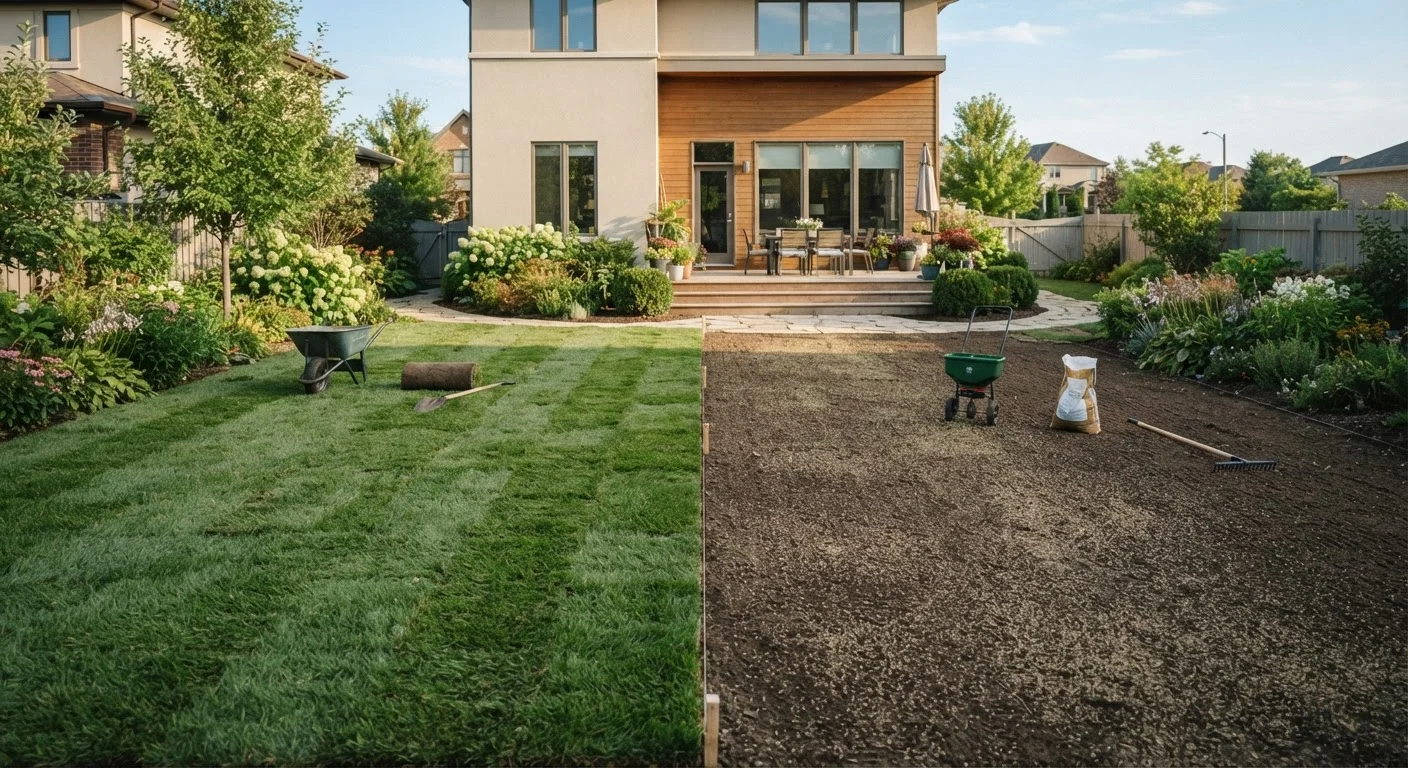
Planting grass seed means spreading seed over prepared bare soil, keeping it consistently moist, and waiting for germination and growth before the lawn becomes usable. The process takes patience. Depending on the grass type and conditions, you can expect visible sprouts in 7 to 21 days, but a lawn strong enough to walk on regularly may take 6 to 8 weeks or longer.
Laying sod means placing pre-grown grass, with its roots attached to a thin layer of soil, directly onto your prepared ground. The rolls or slabs knit into the soil beneath them over two to three weeks. Once rooted, the lawn looks and behaves like an established one much sooner than a seeded lawn would.
Both methods demand the same first step: proper soil preparation. That means removing debris, loosening compacted ground, grading for drainage, and amending soil if needed. Skipping this step produces poor results regardless of which method you choose. See our guide to lawn aeration for help deciding whether your soil needs loosening before you start.
Cost and effort compared
Grass seed is cheaper by a wide margin. On average, seed runs a few cents to roughly 20 cents per square foot depending on the grass type, while professionally installed sod can run 50 cents to over $2 per square foot including materials and labor. For a 1,000-square-foot lawn, that gap adds up quickly.
However, lower cost comes with a higher time investment. Seeded lawns need daily or twice-daily watering during germination, vigilant weed control during early growth, and protection from foot traffic for weeks. Sod requires careful watering in the first two weeks as well, but the establishment window is shorter.
| Criterion | Grass seed | Sod |
|---|---|---|
| Upfront cost | Low (cents per sq ft) | High (50 cents to $2+ per sq ft) |
| Time to usable lawn | 6 to 10 weeks | 2 to 3 weeks |
| Variety selection | Wide range available | Limited to grower stock |
| Erosion risk during establishment | Higher, especially on slopes | Low, holds soil immediately |
| Physical labor required | Moderate | High (heavy rolls) |
| Watering intensity early on | Frequent, weeks of daily watering | Consistent, first 2 weeks critical |
| Weed pressure during establishment | Higher | Lower |
Labor is another factor. Laying sod is physically demanding work: the rolls are heavy, and large areas are often better handled by a professional installer. Spreading seed over a large area can be done solo with a broadcast spreader in a few hours.
Timing and grass type selection
Planting at the right time makes a measurable difference in how well either method takes hold. Cool-season grasses (such as tall fescue, Kentucky bluegrass, and perennial ryegrass) establish best when seeded in late summer or early fall, when soil is still warm but air temperatures have dropped. They can also be seeded in early spring. Sod made from cool-season grasses follows the same seasonal logic.
Warm-season grasses (such as Bermuda, zoysia, and St. Augustine) grow actively in heat, so late spring through early summer is the right window for both seeding and sodding. See our month-by-month lawn care calendar for a fuller breakdown of timing by season.
Seed offers a wider variety choice. You can select species and blends formulated for shade, drought tolerance, heavy clay, or high-traffic areas. Sod availability is dictated by what local growers produce, which limits your options to the varieties they stock.
Long-term care and realistic expectations
Once established, a seeded lawn and a sodded lawn require the same ongoing maintenance: mowing, watering, fertilizing, and periodic weed control. Some turf specialists suggest that seed-grown lawns may develop deeper root systems over time because the roots grow into native soil from the start, while sod roots must push through the thin layer of grower soil first. This is not guaranteed, however, and good soil preparation beneath sod narrows any difference.
Weed pressure is typically higher during early seed establishment because bare soil invites opportunistic plants to germinate alongside your grass. Sod's dense coverage leaves less open ground for weeds to colonize right away. For guidance on what shows up in a young lawn, our common lawn weeds guide can help you identify what is growing before you treat it.
Both methods benefit from a consistent watering schedule once established. Our lawn watering schedule guide covers how often and how deeply to water across seasons, which matters for avoiding shallow root growth regardless of how you started the lawn.
Fertilizing needs are also similar long-term. See common fertilizing myths debunked for a clear picture of what grass actually needs, since over-fertilizing a young lawn causes real damage.