How each type actually feeds your lawn
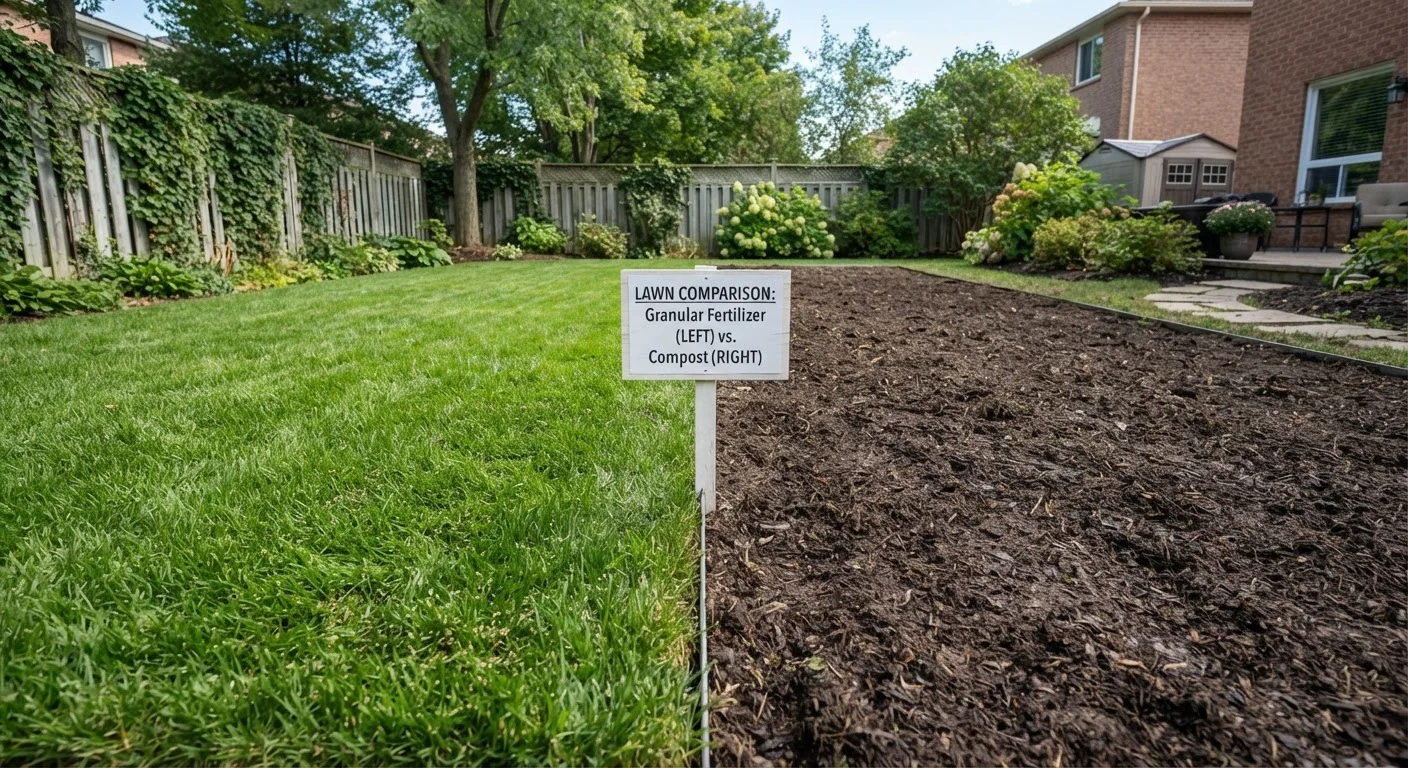
Organic fertilizers come from plant, animal, or mineral sources: composted manure, feather meal, bone meal, and kelp are common examples. They contain nutrients bound inside organic molecules. Soil bacteria and fungi must break those molecules apart before grass roots can absorb the nutrients, so the process takes weeks to months depending on soil temperature and moisture.
Synthetic fertilizers are manufactured from chemical compounds. Most quick-release synthetics dissolve in soil water almost immediately after application, so grass can absorb nitrogen, phosphorus, and potassium within a few days. Some synthetic products use polymer coatings to slow that release, which narrows the gap between the two types somewhat.
Understanding what those three nutrient numbers on the bag mean before you buy either type is worth your time. See our guide to N-P-K ratios for a plain-language breakdown of how to read a fertilizer label.
Soil health and long-term impact
Synthetic fertilizers supply nutrients but do not add organic matter. Used alone over many years, they can gradually lower soil microbial activity because the microbes have less carbon-based material to consume. Soil structure stays the same or can worsen if heavy applications compact the surface layer.
Organic fertilizers add carbon as they decompose. That carbon feeds beneficial microbes, which in turn improve soil aggregation (the way soil particles clump together), drainage, and the lawn's ability to hold nutrients between applications. The improvement is gradual but measurable after two or three seasons of consistent use.
| Criterion | Organic fertilizer | Synthetic fertilizer |
|---|---|---|
| Nutrient release speed | Slow (weeks to months) | Fast (days) |
| Soil organic matter | Increases over time | No change |
| Typical cost per nutrient unit | Higher | Lower |
| Burn risk if over-applied | Low | Moderate to high |
| Runoff risk | Lower | Higher with quick-release |
| Nutrient ratio control | Limited | Precise |
| Application ease | Moderate (can clump) | Easy with spreader |
If your lawn has persistent compaction problems, pairing fertilization with aeration makes the nutrients more accessible. Our article on lawn aeration explains when that step is worth adding to your routine.
Cost, convenience, and application
Synthetic fertilizers typically cost less per pound of actual nutrient. A 20-pound bag of a synthetic product with 30 percent nitrogen delivers more total nitrogen than a 20-pound bag of an organic product that contains 5 percent nitrogen. You need to apply organic products more frequently or in larger volumes to reach the same nutrient target.
On the convenience side, synthetic granules spread evenly with a standard broadcast spreader and require no special storage. Many organic products (especially meal-based types) absorb moisture and can clump in storage. Liquid organic fertilizers are easier to apply uniformly but require a tank sprayer.
Soil testing before you buy
A basic soil test from your local cooperative extension office tells you which nutrients your lawn actually needs. Applying any fertilizer without that baseline means you may add nutrients that are already adequate, which wastes money and increases runoff risk. Many extension offices offer tests for under $20, and results usually include a recommendation tailored to your grass type.
Whichever type you choose, timing matters as much as chemistry. The seasonal lawn care calendar lays out when to fertilize across the year for cool-season and warm-season grasses.
Environmental and safety considerations
The biggest environmental concern with synthetic fertilizers is nutrient runoff. When quick-release nitrogen or phosphorus washes off a lawn after heavy rain, it can enter storm drains and local waterways, contributing to algae blooms. Applying only the amount your soil test recommends and avoiding applications before rain cuts this risk significantly.
Organic fertilizers release nutrients more slowly, so they are less likely to produce runoff spikes. However, some high-nitrogen organic products can still contribute to runoff if applied heavily before a downpour.
For household safety, most organic products are low-hazard after they dry or settle into the soil, but you should still keep children and pets off a freshly fertilized lawn until the product is watered in and the surface is dry. Synthetic fertilizers, especially those with added herbicides or pesticides, usually carry specific re-entry intervals on the label; follow them exactly. Check whether your city or county has any restrictions on phosphorus applications, since several states limit or ban phosphorus fertilizer on established lawns where soil tests show adequate levels.
For more context on common mistakes that affect both types, the lawn fertilizing myths article addresses timing and frequency errors that homeowners repeat most often.