What hardiness zones actually measure
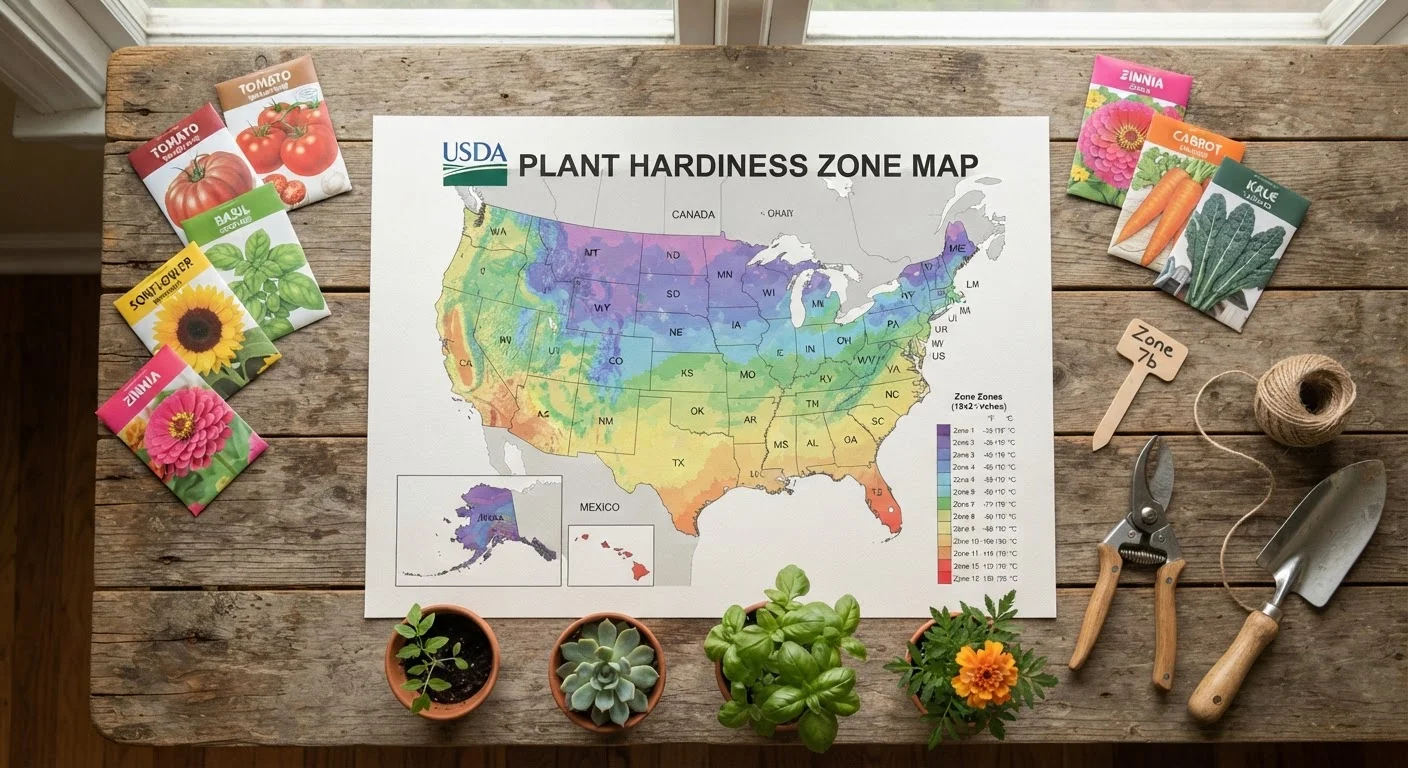
The USDA Plant Hardiness Zone Map measures one specific thing: the average lowest temperature a region reaches each winter. That number matters because cold is the most common reason perennial plants, trees, and shrubs die between growing seasons. A plant labeled 'hardy to zone 6' has been assessed to survive the average minimum winter temperature of zone 6, which ranges from -10 to 0 degrees Fahrenheit.
The map runs from zone 1 (interior Alaska, below -50 degrees Fahrenheit) to zone 13 (parts of Hawaii and Puerto Rico, above 60 degrees Fahrenheit). Most of the contiguous United States falls between zones 3 and 10. The 2023 update shifted roughly half of the country into a slightly warmer sub-zone compared to the previous 1976-2005 baseline, reflecting a warming trend in recorded temperature data.
What the zones do not measure is equally worth knowing. They say nothing about summer heat, rainfall, humidity, soil type, or the length of your growing season. A gardener in humid coastal South Carolina and one in arid inland Texas may share a zone number but face very different growing conditions.
How to read a plant tag using zone information
Most nursery plants and seed packets carry a hardiness zone range printed on the tag, such as 'zones 4-8.' This tells you two things. The lower number is the coldest zone where the plant typically survives winter. The higher number is the warmest zone where it still performs well; beyond that, summer heat becomes the limiting factor.
To use that information, compare your zone to the range on the tag. If your zone falls within the printed range, the plant is a reasonable choice for your yard as a perennial. If your zone is colder than the lower number, the plant may die back over winter. If your zone is warmer than the upper number, the plant may struggle with heat or fail to get the cold dormancy period it needs.
Check the tag before you buy
Before purchasing any perennial plant, tree, or shrub at a nursery, find the hardiness zone range printed on the tag or label and compare it to your zone. Skipping this step is one of the most common reasons new plants fail to return after winter. If no tag is available, ask a nursery staff member or look up the plant by its botanical name.
For annuals, zone ratings matter less because these plants complete their full life cycle in a single growing season regardless of winter cold. Zone information on annual seed packets usually signals when to plant relative to your last frost date, not whether the plant will overwinter.
Microclimates and why your yard is not one uniform zone
Hardiness zones describe broad regional averages. Your individual yard may behave quite differently from that average due to microclimates: small pockets of warmer or cooler air created by physical features. A south-facing brick wall absorbs heat during the day and radiates it overnight, often keeping nearby soil 5 to 10 degrees warmer than open ground. A low-lying area at the bottom of a slope collects cold air that drains off higher ground, creating a frost pocket that can freeze earlier and harder than the surrounding landscape.
Common factors that create warmer microclimates include proximity to a building foundation, pavement, or a large body of water. Factors that create colder microclimates include shade from structures, open hilltops exposed to wind, and poorly drained low spots. Paying attention to where frost lingers latest in spring or where snow melts first can help you map these zones in your own yard.
This matters practically: a plant rated one zone warmer than yours might thrive against your house's south wall but fail in the open center of your yard. For more on choosing plants that match both your zone and specific site conditions, see our guide to native plants for American gardens.
Using zones as part of a broader planting strategy
Zone information gives you a reliable filter for narrowing plant choices, but it works best alongside other local data. Your county cooperative extension office publishes planting calendars that account for average first and last frost dates, which tell you how long your growing season actually runs. Soil test results tell you whether your pH and nutrient levels suit a particular plant. These details, combined with zone awareness, give you a much clearer picture than zone alone.
When planning a vegetable garden, hardiness zones matter less than frost dates because most vegetables are annuals. For perennials, trees, and shrubs, zone matching becomes the first screening question. A raised bed can give you slightly more control over soil temperature and drainage, which sometimes lets you push the boundaries of what your zone rating technically allows.
Your spring planting checklist is a natural next step once you know your zone: you can match planting windows to your specific frost dates and zone conditions rather than following generic advice. And if you are gardening under tree canopy, shade affects plant selection just as much as cold tolerance; see our shade garden guide for plants suited to low-light conditions within your zone.