Why a checklist helps in spring
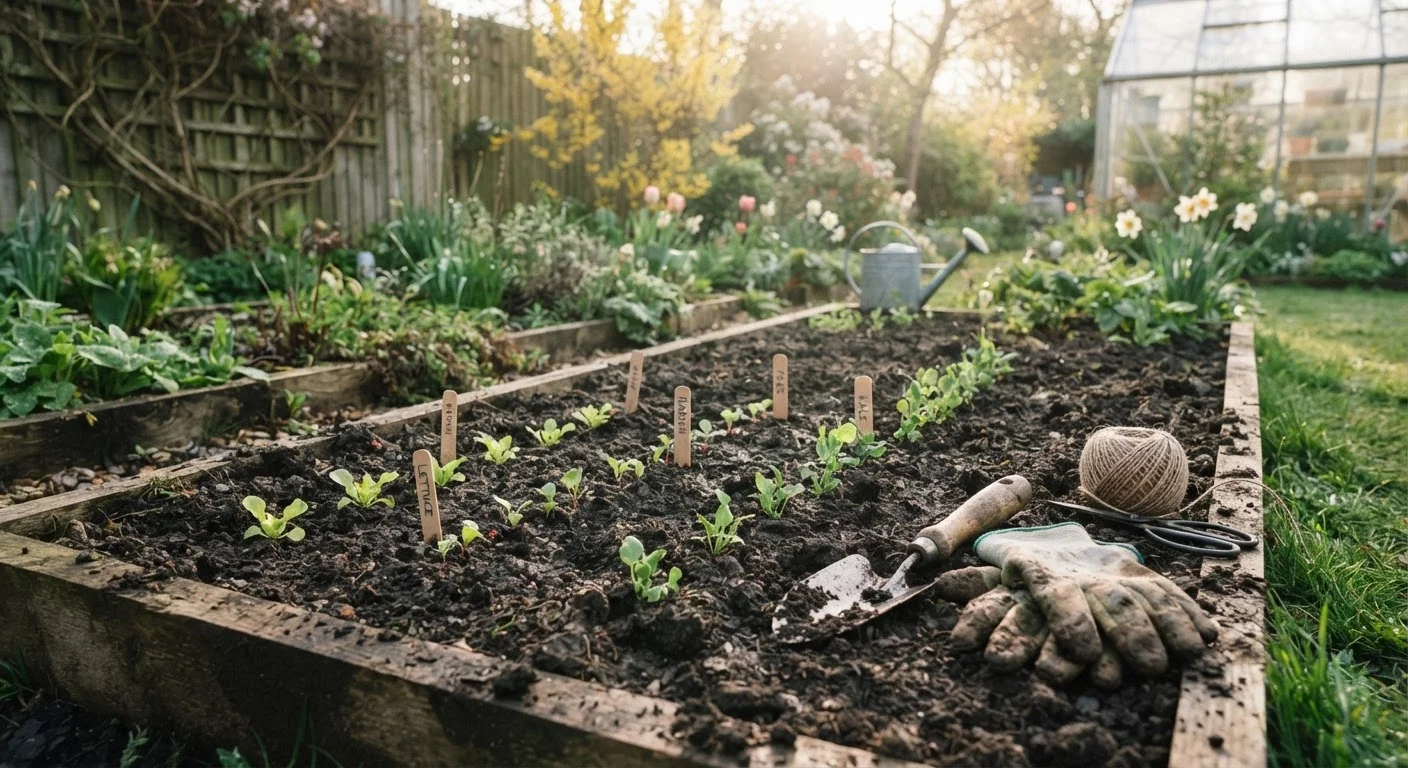
Spring gardening has a short, unforgiving window. Soil readiness, seed timing, and frost dates all converge in the same few weeks, and skipping a step at the beginning often means struggling with the consequences all season. This checklist walks through every category in the order most homeowners tackle them: soil first, then seeds, then the perennial beds and lawn.
For those growing in raised beds, the same sequence applies. See our complete guide to raised bed gardening for bed construction and fill mix details before working through the soil prep steps below.
If you want month-by-month guidance beyond planting, the seasonal lawn care calendar covers mowing, fertilizing, and watering through every season.
Soil thermometer
Confirms soil is warm enough for direct sowing before you commit seeds to the ground.
Soil test kit or extension service test
Identifies pH and nutrient deficiencies so amendments target actual problems.
Seed-starting trays and cells
Provides the controlled environment seeds need to germinate before outdoor conditions are ready.
Grow light or south-facing window
Supplies consistent light to prevent seedlings from growing spindly before transplanting.
Garden fork or spade
Works compost and amendments into soil without compacting it.
Row cover fabric (floating row cover)
Protects early transplants and direct-sown crops from late frosts without blocking rain.
Bypass pruners
Makes clean cuts on shrubs, perennial stems, and rose canes without crushing tissue.
How to use this checklist
Work through each group in sequence. Soil preparation cannot be rushed, so start there even before you buy seeds or order transplants. The seed-starting group assumes you are growing from seed indoors; skip it if you plan to buy transplants from a nursery.
Priority levels are marked on each item. "Must" items affect plant survival or season-long productivity. "Should" items improve results noticeably. "Nice to have" items are worth doing when time allows but will not derail the garden if skipped.
Do not work wet soil
Walking on or digging waterlogged soil compacts the structure, crushing the air pockets that plant roots need. Press a handful of soil into a ball: if it crumbles when you poke it, it is ready to work. If it stays in a muddy clump, wait a few more days.
Frost dates are estimates, not guarantees
Average last frost dates are based on historical weather records and can vary by several weeks in any given year. Watch local forecasts after transplanting, and keep row cover fabric or old bed sheets on hand to protect plants during surprise cold snaps.
Working through the checklist
The soil and seed-starting groups carry the most weight. Skipping the soil test is the single most common spring mistake: homeowners add fertilizer by habit rather than need, sometimes pushing nutrient levels high enough to cause problems. Your local cooperative extension service can run a detailed test for a small fee if you want more precision than a home kit provides.
Soil and bed preparation
Seed starting indoors
Direct sowing outdoors
Perennials, shrubs, and lawn
Tools and supplies check
For the perennial and shrub group, timing division too late in spring, once plants are actively growing tall, stresses them and often delays blooming for a full season. Earlier is almost always safer.
Considering adding more native species this year? Our article on native plants for American gardens explains which types handle local conditions with minimal extra care.
Check labels before applying any amendment
Fertilizers, lime, sulfur, and pre-emergent herbicides all carry specific application rates. Applying more than directed can burn roots, alter pH too sharply, or damage beneficial soil organisms. Always read the product label and match the rate to your soil test results, not a general rule of thumb.
Keeping costs in check
Spring garden spending can spiral if you buy everything at once. Prioritize the items that directly affect plant health: a soil thermometer, a soil test, and clean seed-starting supplies. Dividing your own perennials and starting vegetables from seed rather than buying transplants reduces costs significantly over a full season.
The home maintenance budget guide has a useful framework for thinking about which outdoor tasks to fund first when resources are limited. The same logic applies here: fix soil and drainage issues before spending on new plants or ornamental additions.
Tools last many seasons when cleaned and stored properly, so sharpening and oiling existing tools before buying replacements is worth the 20 minutes it takes.