Why raised beds work
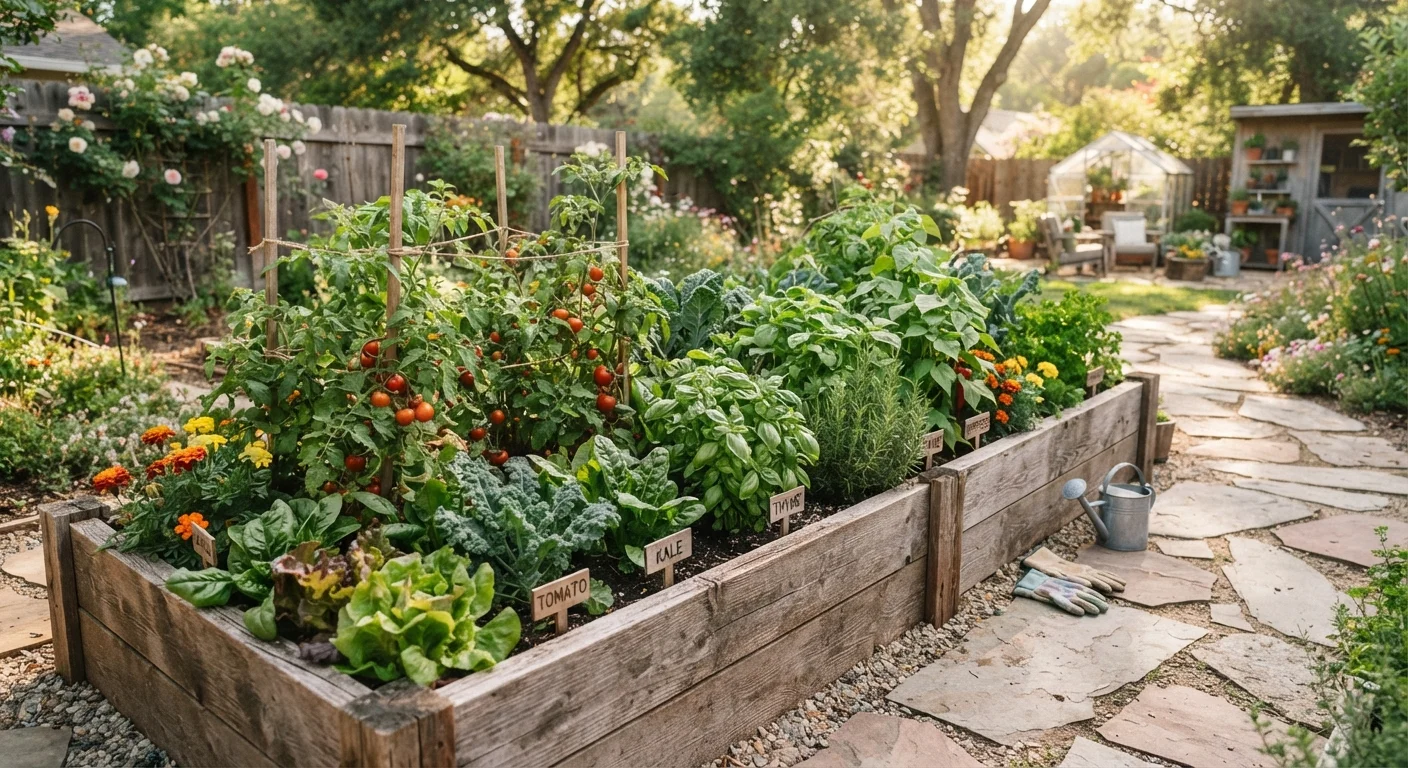
Raised beds solve three problems that stop many homeowners from growing food successfully: poor native soil, uneven drainage, and hard-to-reach planting areas. Because you fill the frame with a custom soil mix, you sidestep whatever clay, compaction, or rocky ground sits underneath. Roots find loose, fertile material and grow deeper and faster than they typically would in unprepared ground-level soil.
Drainage improves because water moves freely through the elevated structure rather than pooling at the surface. In spring, that same elevation means the soil warms a few weeks ahead of the surrounding yard, giving cool-season crops like lettuce and spinach an earlier start. The defined perimeter also keeps grass and certain weeds from creeping in from the sides, which reduces maintenance without eliminating it.
For gardeners with mobility limitations, a taller bed (18 inches or more) can eliminate the need to kneel or crouch. Even a standard 10- to 12-inch depth puts the work zone closer to your hands and reduces the strain of a full season of tending.
Start with one bed, not five
A single 4-by-8-foot bed is enough to grow a meaningful quantity of vegetables and learn how your specific site performs. Expanding is straightforward once you know how sun, water, and drainage behave in your yard. Overbuilding before that first season teaches you less and costs more.
Choosing a location
Sun exposure is the single biggest factor in a raised bed's success. Most vegetables and herbs need at least six hours of direct sunlight daily, and eight hours produces noticeably better yields for tomatoes, peppers, squash, and beans. Walk your yard at midday and note where shade falls from trees, fences, and the house itself. That exercise takes ten minutes and prevents months of disappointment.
If your yard is mostly shaded, you still have options. Leafy greens, herbs like parsley and cilantro, and some root vegetables tolerate partial shade. For deeper shade situations, the shade garden guide covers which plants actually thrive in low light.
Place the bed within reach of a water source. Hand-watering a raised bed every other day becomes tedious quickly; a nearby spigot and a short hose run make a drip line or soaker hose practical. Also confirm the ground beneath the bed is reasonably level. A slope of more than a few inches will cause water and soil to migrate toward one end over time.
Avoid placing beds directly under large trees. Roots will eventually grow up into the bed's soil, competing with your plants, and the canopy will cut light. Keep at least 6 to 8 feet of clearance from drip lines where possible.
Sizing and materials
Width matters more than length. A bed wider than 4 feet forces you to step inside it or reach awkwardly, compacting the soil you worked to loosen. Four feet across is comfortable for most adults; 3 feet works better for children or anyone with limited reach. Length can be whatever fits your space, though 8 feet is a practical standard because it divides evenly for crop rows and aligns with common lumber lengths.
Depth should be at least 6 inches for shallow-rooted crops like lettuce and radishes, 10 to 12 inches for most vegetables, and 18 inches for deep-rooted plants such as carrots and parsnips. If you are building over concrete or compacted hardscape, go deeper to give roots enough room.
For materials, untreated rot-resistant wood (cedar and redwood are common choices) holds up for many years without leaching anything into the soil. Treated lumber has evolved, and lumber rated for ground contact under current standards is widely considered acceptable for food gardens, though some gardeners prefer to avoid it. Galvanized steel beds have grown popular and are durable, though metal conducts heat and can warm the soil more than wood does in hot climates. Concrete blocks, bricks, and composite boards also work. Avoid old railroad ties or salvaged wood with unknown treatment history near food crops.
Hardware cloth (a rigid wire mesh with small openings) laid across the bottom before filling will deter burrowing pests like voles and gophers without blocking drainage.
Filling your bed with the right soil mix
Bagged potting mix alone is expensive at raised-bed scale and often lacks the mineral content that in-ground soil provides. A widely used starting ratio is roughly one-third compost, one-third topsoil, and one-third coarse material such as aged wood chips, perlite, or coarse sand. This blend drains well, holds moisture between waterings, and supplies organic matter as it breaks down.
Compost is the most important ingredient. Well-finished compost (dark, crumbly, earthy-smelling) feeds soil microbes that in turn make nutrients available to plant roots. Adding a 1- to 2-inch layer of fresh compost to the top of the bed each season replenishes what crops remove.
Avoid filling beds entirely with native yard soil. Most in-ground soil compacts under its own weight when confined to a raised structure, and compacted soil defeats the drainage advantage you built the frame to create.
A note on soil volume calculations
A 4-by-8-foot bed that is 12 inches deep holds roughly 32 cubic feet of material, which equals about 1.2 cubic yards. Buying topsoil and compost in bulk by the cubic yard from a landscape supplier is almost always more economical than stacking bagged products for anything larger than a very small bed. Measure your planned dimensions before ordering to avoid both shortfalls and waste.
Before buying large volumes of topsoil or compost, ask the supplier for a basic analysis. Reputable bulk suppliers can tell you the source material and any amendment history. Knowing the pH (the scale measuring soil acidity or alkalinity) helps you adjust before planting rather than troubleshoot later. Most vegetables prefer a pH between 6.0 and 7.0.
What to plant and when
Your USDA plant hardiness zone tells you the average minimum winter temperature in your area, which determines which plants survive year-round and when your frost-free window opens. The plant hardiness zones explainer breaks down how to find and use your zone number when selecting plants and timing plantings.
Cool-season crops (lettuce, spinach, kale, peas, broccoli, carrots) can go in several weeks before the last expected frost date in spring. Warm-season crops (tomatoes, cucumbers, squash, basil, peppers) go in after frost risk has passed and soil temperatures have reached at least 60 degrees Fahrenheit.
Succession planting, which means sowing a new batch of the same fast-maturing crop every two to three weeks, keeps harvests steady instead of delivering everything at once. Radishes, lettuce, and bush beans respond well to this approach. Once a bed finishes producing one crop, a second planting of a different family can follow in the same season.
For a season-by-season checklist covering seed starting, dividing perennials, and soil preparation, the spring planting checklist walks through each step in order. At the other end of the season, the fall yard prep checklist covers how to close the bed properly so it is ready to plant again in spring.
Ongoing care and troubleshooting
Raised beds dry out faster than ground-level gardens because air circulates around all four sides. During warm weather, check soil moisture an inch below the surface every day or two. If it feels dry at that depth, water thoroughly until it drains from the bottom. A drip irrigation line on a simple timer removes the guesswork and keeps foliage dry, which reduces fungal disease.
Mulch (a 2-inch layer of straw, wood chips, or shredded leaves) laid over bare soil between plants slows evaporation, moderates soil temperature, and suppresses weeds. Replenish it when it compresses below an inch.
Nutrient depletion happens steadily as crops grow. Adding compost at the start of each season covers the basics, but heavy feeders like tomatoes and corn may benefit from a balanced slow-release fertilizer applied according to package directions. Signs of deficiency include pale leaves, stunted growth, and poor fruit set.
Common pests vary by region, but physical barriers work reliably across most of them. Row cover fabric (a lightweight, breathable cloth) laid over crops keeps aphids, beetles, and caterpillar-laying moths off plants without chemicals. Remove it when plants need pollination or when temperatures underneath climb too high.
If you want to extend your palette beyond vegetables, native plants added to an ornamental raised bed support local pollinators and need less supplemental water once established, which reduces the watering demands described above.